About
About this edition
Five Decades: A Pioneer’s Perspective was written by Rev. Vicente T. Onggao, one of the three Filipino pioneer workers of the Southern Baptist ministry on the island of Mindanao, and by his own account the last of them still living when he set it down. He began recording the events in 1981. He died on 10 March 2000; his son Jeremias and daughter-in-law compiled the manuscript, filling its gaps from conversations with him while he lived, and with his wife Angeles, his sister-in-law Angelina, and his older children. The booklet was printed in the Philippines in 2004.
This web edition is a transcription of that printed booklet. The text follows the original closely, including its spellings of names and places; original page numbers are noted at the head of each chapter. The photographs have been lifted from the same scanned pages and are reproduced with the captions the book gave them.
Front matter
Acknowledgments
Page 5
This work is a result of some special persons who assisted in making this publication possible.
First and foremost, to Mrs. Angeles Onggao, the author’s loving, caring, understanding and hardworking wife who supported his ministry to the end.
To Mrs. Reta Beall, wife of the then Director of Missions of the Puget Sound Baptist Association, the first person who has shown genuine interest and appreciation of the value of the manuscripts. She proofed and typed the first draft of the manuscripts.
To Dr. Vincent Inzerillo, Northwest Baptist Convention Language Strategist and partner in the ministry, who affirmed the author’s passion for the lost even in a foreign land.
To Miss Angelina Pacificar who was part of the first group of Southern Baptist believers in Mindanao and confirmed some of the events and names in this work.
Above all, to God who is forever faithful and true, to Him we give back the honor and the glory.
In behalf of Vicente T. Onggao who joyfully went to be with his Saviour and Master in March 10, 2000, thank you to all who shared his life and labor in the Lord.
His children:
- Deborah Hope Lazaro
- Jemima Delovino
- Helon Onggao
- Lemuel Onggao
- Jeremias Onggao
Front matter
Foreword
Pages 6–8
History could either be in written form or in oral communication. As far as transmittal is concerned, the former would have a better credibility than the latter. Limitations in human memory could alter facts of oral history as it is transmitted from one generation to another. On the other hand, written history has the distinct advantage in that the true import of the past event is preserved in a more or less definite fashion.
The process involved in the Southern Baptist endeavor in the island of Mindanao from the historical perspective can be reduced into writing with full backing of some written records as well as oral communication from people who were privy with the facts surrounding the said mission endeavor.
Inspite of his limitations as a writer, Rev. Vicente Onggao began to record in 1981 to the best of his knowledge and recollection the events in the Southern Baptist ministry among the Filipinos in the island. Up to the last few weeks, if not days of his life, his memory, his thought process, had almost been vivid. Hence, there is no doubt that the facts, figures, information, ideas and prognostications can be viewed as something that is realistic, honest and in harmony with truth.
This observation finds validity and vindication in a very moving, yet solemn moment in 1999 as the Mindanao Convention of Southern Baptist Churches celebrated the 50th Anniversary of the Convention. A letter written by Rev. William Solesbee, one of the pioneer missionaries in Mindanao, was read in one session of the meeting. It mentioned Rev. Vicente Onggao as the Pastor who had been with him and had played a key role in the growth of the ministry in the island. The said letter is in the record file of the Mindanao Baptist Convention of Southern Baptist Churches.
Based on the credible assertion of Rev. Solesbee, there can be no doubt that this piece “Five Decades: a Pioneer’s Perspective” cuts to the very heart of the Southern Baptist Ministry in the island of Mindanao. It brings into light some important information about the Southern Baptist beginning in the island.
Reverend Vicente Onggao went home to be with His Maker in March 2000. In my own limited skill in writing, my wife and I indulged in a lesser challenge of compiling what he wrote down in black and white and at the same time, filled the gaps with oral information gathered from him while he was alive, from his wife, Angeles, from his sister-in-law, Angelina and from his older children (Some were old enough to know and remember events as they transpired then.). Questions were incessantly asked, information clarified with the utmost desire not to lift man up but that the truth shall be given life.
Rev. Vicente Onggao migrated to the United States of America in the early eighties. While in the States, he would always ask questions about the state of the Southern Baptist in Mindanao. I, being actively involved with the Southern Baptist Mission work as Regional Director of Seminary Education by Extension in Mindanao and Luzon from 1983–1993 updated him with existing facts. This is to bring to rest to the mind of a veteran who left his secular job to follow the Master’s call and served Him faithfully to the end.
Jeremias P. Onggao
Filipino International Christian Fellowship, Pastor
April 2003 · Tacoma, WA
Introduction
Five Decades: A Pioneer’s Perspective
Pages 9–10 · by Rev. Vicente T. Onggao
One great feature of Christianity as a “religion” is its great emphasis on servanthood and Christian service. As a matter of fact, servanthood and Christian service are the very essence of Christianity. Called by God into the ministry of servanthood, I had the opportunity to serve God and man through the auspices of Southern Baptists in Mindanao. Indeed, it was a challenging yet humbling experience. As one of the three Filipino pioneer workers in Mindanao, and perhaps at this writing, the only surviving one, I had a unique perspective of the organization’s past, a working knowledge of the present, and perhaps a glimpse of the potential of the Southern Baptist Ministry in Mindanao.
This writer, hereby, acknowledges that this historical essay is not the full text of the Southern Baptist saga in the Philippines. As a matter of fact, this piece is limited to the highlights of the writer’s personal experience as a pioneer worker in Mindanao and is an attempt in a limited way to put into writing the beginnings, the growth, the challenges, and the potentials of the group.
Without prejudice to what others have accomplished and experienced about the work in Mindanao in the context of what is authentic and truthful, the writer would endeavor with utmost care and accuracy to chronicle the events he had an active part of, events he saw take place, some events he had information of, as well as his observations and apprehensions. Without fear of contradiction, the writer is of the conviction that he has a moral license to write some historical facts about Southern Baptists work in Mindanao since he was an actual participant in the birthing, growing, and the maturing process of the organization.
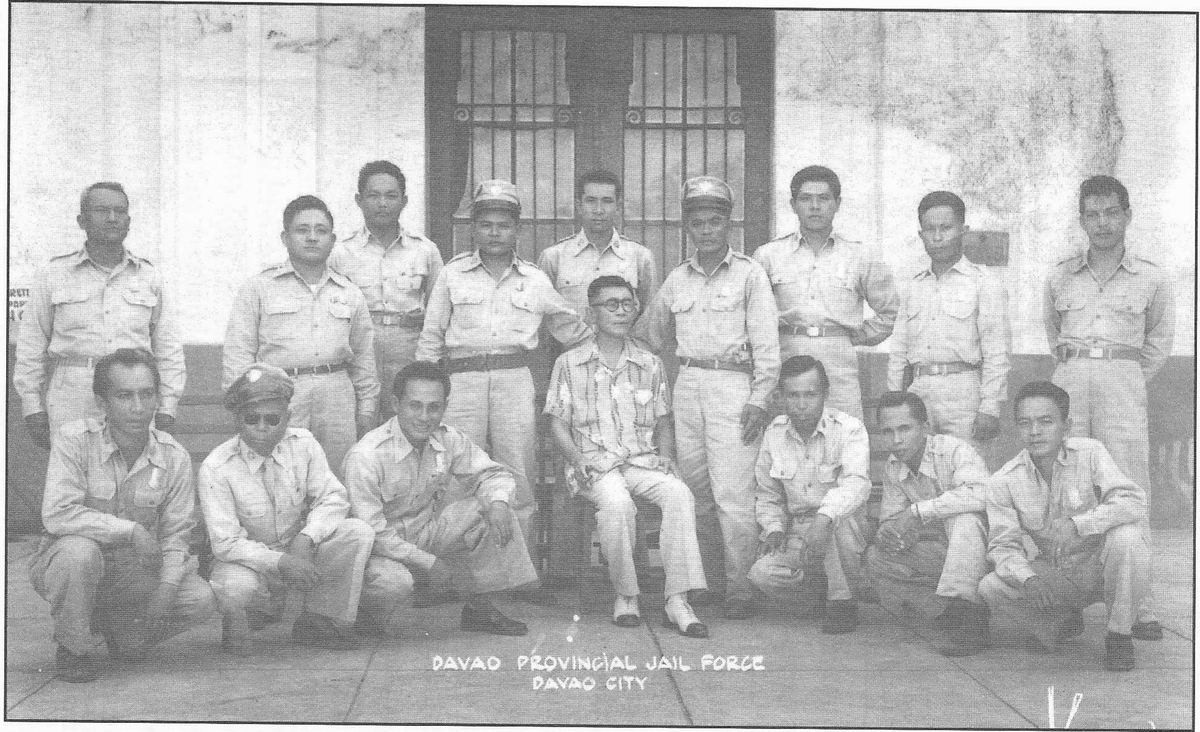
Chapter One
The 50’s: Was It An Accident?
Pages 12–45
Towards the late 1940’s, a dark and ominous cloud that carried the possibility of turbulence moved towards China. This possible turbulence had a political undertone that would strike into the cutting edges of China’s life in general. Allegedly, the Kuomintang Party in China, under the leadership of President Chang Kai Shek, was a corrupt government. Among the political pundits of the time, this was not secret anymore. Indeed, as days passed by, it was evident that the communists were making inroads into the political mainstream of China and were threatening close to uprooting the incumbent government.
By April of 1949, the fear became a fact, and the inevitable happened. Mao Tse Tung, with his intrepid army, marched into the very heart of China’s political bulwark and drove Chang Kai Shek, like a scampering rabbit, from the pinnacle of power to the impoverished island of Quemoy and to Formosa. As an aftermath of this political changeover, and this is tragic though important, the blossoming Southern Baptist Mission in China was negatively impacted. Missionaries and nationals alike scrambled out of the country.
The Transition
Some of those uprooted missionaries found their way to Philippine soil. They were hot on the trail of Chinese nationals who were running away from possible political repression and religious persecution that the communist might wage. These displaced missionaries, hoping to continue their ministry among this displaced people, found the local environment politically and religiously tolerant. These Southern Baptist missionaries were hopeful that soon Chang Kai Shek would regain control of the Government, resolving in the process the political turbulence and thereby opening up a door for them to return.
There is a question that needs underscoring, at least at this point in time. Was it an accident that the tides of political unrest in China washed these missionaries to the shores of the Philippines? A quick study of the Bible will without doubt bring a negative answer. The lives of great Bible heroes like Joseph, David, Moses, and a host of others define in clear terms the fact that with God, there are no accidents. God plans every part of His work. With God, there are no surprises, no misfires, no unforeseen events, and no unknown factors. God’s plans are always complete and absolute. However, God’s comprehensive plan may include political repression, religious persecution, physical pain, financial loss, social alienation, broken relationships, and to some extent, even death. Such is the unquestioned wisdom of our wise, Holy God; the events in this life are under the control of the Omnipotent One.
The Davao Experience
Curiously, the Southern Baptist work in Mindanao among the Filipinos was a by-product of a political and religious confluence of events. The political dimension was ably filled by the political upheaval in China brought about by the advent of communism. This political upheaval uprooted an otherwise strong Southern Baptist ministry in China and exiled missionaries to friendly countries like the Philippines.
As the political situation in China deteriorated, a micro-religious upheaval was brewing in a small church in Davao City, the Independent Evangelical Church. Together with my wife and five children, I worshipped and fellowshipped with the church for almost two years. In these two years however, I never formally affiliated with the church. Nevertheless, the whole church treated us kindly; in fact, it seemed to have considered us as bonafide members. Sometime during this two-year period, I was requested to teach Sunday School, a responsibility that I accepted with humility and with great excitement. Later, I was requested to preach from time to time.
Indeed, the fellowship within the Independent Evangelical Church was fraught with cordiality and sweetness. Nobody among us had any premonition that a thunderbolt would soon strike without even the slightest warning. The most influential member of the church, who was also the number one financial supporter, and the pastor became at odds with each other. With malice towards none but with charity to all, I will not mention here the very root of the contention in order to protect the privacy and interests of the parties directly concerned.
As a result of the controversy, the pastor used the immunity of the pulpit to lambast the defenseless brother. The “lay leaders” of the church attempted to mediate in order to check the spread of the “religious cancer.” However, the pastor elevated the case to the courts of men. This writer and five others became respondents to a ridiculous criminal case. We were boxed into a situation that led us to engage the services of a lawyer. Warrants for our arrests were ordered. Just before the warrants were actually served, a miracle happened: The judge dismissed the case. It was the judge’s honest decision that since the case was basically a religious matter, by virtue of the doctrine of the separation of church and state, his sala had no jurisdiction over the case.
Needless to say, we thanked God for His timely intervention. However, it seemed the rift was beyond repair. Our small group left the Independent Evangelical Church, but we decided to stay as a group and worship God together. Our immediate need was a place of worship. However, we treated the problem as a minor one and resolved to go on with our spiritual sojourn with or without a building. I honestly believe that tragedies are accurate gauges in life. A true believer will draw near to God when tragedies come and can be likened to a child who will cling tighter to the mother’s skirt when threatened. To a self-proclaimed Christian, tragedies are an occasion and an excuse to drift further away from God.
The rift between the pastor and us reminds me of the rift between Paul and Barnabas as recorded in the book of Acts. In the early stages of their friendship, concern, love, and trust characterized the relationship. As a matter of fact, after Paul’s conversion, Barnabas fetched Paul from Tarsus and presented him to the Christian Church in Antioch. As they were preparing for the second missionary journey, a problem came up. Paul did not want to bring John Mark any more, for he had abandoned them on their first missionary journey. Barnabas, however, wanted to give the young man another chance. The dividing line was so sharp that they ended their alliance and went separate ways (Acts 15:36–41). No record in the Bible seems to indicate the two worked together again.
Indeed, that was our experience at the Independent Evangelical Church. The division was so sharp that the chances of reconciliation were far-fetched. Later, I realized God was merely preparing us for a more stable witness to the city of Davao to the glory and honor of His name. For the record, the group that left the Independent Evangelical Church was made up of the following families: the Onggao family, Caballero family, Fortuna family, Beciera family, Molinos family, Bantug family, Pacificar family, Bardoquillo family, and the Doromal family.
I vividly remember our determination to grow spiritually. We continued studying the Word and intensified the fellowshipping and bonding with one another and with God through the ministry of intercession. In spite of the absence of convenient facilities, it was business as usual for the group. There were Sundays when the group met at Men Seng Restaurant for worship. At other times, Sunday services as well as prayer meetings were held at members’ homes. Times were difficult and the conditions were inconvenient; nevertheless, the indwelling Holy Spirit provided the qualitative difference within each believer to offset the external difficulties.
The group had been meeting in that de facto status for some time when the dark clouds of political turmoil in China reached the Philippine shores. In a manner no man can ever explain, the political unrest in China crossed the path of the domestic church problem and paved the way for the birth of the Southern Baptist ministry in Davao City among the Filipinos.
The God-given Opportunity
One day, Mr. Magdaleno Caballero, one of the displaced members of the Independent Evangelical Church, paid me a visit. He had some interesting news to share. A friend of his, Mr. Dalipe, who knew of our predicament had informed him about the presence of a missionary couple in the city. As a matter of fact, this friend went to the extent of accompanying Mr. Caballero to the missionary’s house. Truly, it was the best news I had had for a long while. Since it was already late in the afternoon, Mr. Caballero and I decided to pay the missionaries a visit the following day. I requested him to inform the other brethren about our plans. We parted ways that afternoon with a prayer.
At about two o’clock in the afternoon the following day, Mr. Caballero and I proceeded to the missionary’s house, armed with a prayer that we might find favor in God’s sight as we dealt with the unknown missionary couple. On the way, Mr. Caballero requested me to be the spokesperson of our two-party delegation. I was given the privilege and the burden of presenting our aspirations and our needs to the couple. Upon arrival, we immediately knocked on the door. After a minute or two, a motherly Anglo lady responded. We greeted her, and before she could say anything, we introduced ourselves. She inquired about the nature of our visit. First of all, we told her we were Christians. Secondly, we explained that we desired an audience with the missionary couple. In response, she told us she was the missionary’s wife. Her husband was not home, but would be shortly.
She invited us into the house and made us feel comfortable. As it was hot that afternoon, the kind lady offered us glasses of very cold water that quenched our thirst. We felt refreshed by the cold water, but more than anything else, by the warm Christian spirit with which she received us into her home. Having made us comfortable, she settled in a nearby chair and engaged us in a friendly conversation. She inquired of the purpose of our visit with definite curiosity, and we answered her with utmost honesty.
The missionary’s wife gave us an idea of who they were, what their work was, and why they were in the city. She explained that they had been Southern Baptist missionaries to China, but were temporarily located in Davao City, waiting for the settlement of the political unrest in China. This was our introduction to the Jacksons.
Sometime later, a frail-looking Anglo man marched into the house. There was no doubt in my mind who this person was. After we were formally introduced, Mrs. Mina Jackson motioned me to present the purpose of our visit to Rev. John Edward Jackson. I carefully explained to the missionary that our group was in dire need of help and direction. The fatherly but stern-faced missionary listened intently to me and never said a word in the course of my presentation. I finally expressed to him the possibility of him working with us and thereby bringing our group under the umbrella of the organization he represented.
To my dismay, the missionary seemed not to be interested. With utmost honesty and sincerity, he explained his position. His appointment from the Foreign Mission Board was for him to work with the Chinese in China. As a matter of fact, his training was all about the Chinese language and culture. His presence in the Philippines was temporary, and he expressed in no uncertain terms the hope that soon they would be back in China. It was his organization’s opinion that in two or three years, China would have achieved a normal situation.
But I was not ready to give up. There was an unseen power that gripped me and was urging me to go on pleading. Rev. Jackson held his fort. He was adamant, but I was stubborn. I pointed to him the Great Commission. I stressed the word “ALL.” I explained to him my belief that the Lord’s command is not to one particular race, but to all races that are in dire need of help. Mrs. Jackson and Mr. Caballero were our passive, though, interested audience.
It was already late, but sad to say, there was no progress in sight. In desperation, I pleaded, “Rev. Jackson, since you are here in the Philippines and here are a handful of Filipinos requesting for your help of which you are in a position to dispense of as Christian missionaries, I believe you should not just ignore our request. We are pleading for help that your Mission, through you, can ably dispense. Please do not close your eyes and ears. Help us.”
Finally, I said, “I am not leaving until you give us some ray of hope.” An awesome silence pervaded the room. Sensing the sincerity of my convictions and the urgency of the group’s need, the Godly missionary said, “Let me first write and present your request to the Foreign Mission Board in Virginia before making any commitment to you and your group.” He promised to give us information as soon as he received word from his headquarter. We thanked the couple for the time they had invested and for allowing us to present our needs. We left the place with an invitation from Rev. Jackson for the group to join them in their Wednesday prayer meeting. With those words, no matter how insignificant and non-committal they were at the time, we left the mission house with our spirits soaring to the high heavens. The frowns on our faces were transformed into smiles.
We enthusiastically shared the good news of our partial victory with our group. While we waited for the response from Richmond, Virginia, our ministry of intercession intensified. We constantly petitioned God’s throne of grace for a favorable response. Our spirits were extraordinarily high and our hopes firm as only faith could make them. After that initial encounter, the group did not count days as they passed by. Our attitude was one of subjection and commitment to God’s absolute will and control. We were like a drowning man in the midst of a vast ocean who does not count the hours and the days he spends in the water. His attitude is only of expectation for a forthcoming help. We were not hoping against hope. We were hoping because “All things work together for good to them that love the Lord and who are called according to His purpose” (Romans 8:28 KJV).
They Came, Saw, and Were Conquered
We were not privy then and we don’t know even now how Reverend Jackson communicated our need to Richmond. We were not aware of the language he used or the urgency of his request. This thing I know, God works in simple, yet definite ways. While waiting for word to filter in from Richmond, the group came to the Mission house for a prayer meeting the first Wednesday after the first encounter. It was a fulfilling moment. At God’s appointed time, he had sent us a helper, a guide, and a friend to satisfy the needs of His children. It is assuring to know that God’s plans are perfect. Our prayer meeting soon graduated into a Sunday School. The Mission house was still made available for our use. Mrs. Jackson provided music by banging on her piano. The group really enjoyed those joyous moments. Thus, rapport was established between the Rev. Jackson and the Filipino pioneer group that was the herald of Southern Baptists as a denomination in the city.
More or less, two months after our first contact with the Jacksons, the response from Richmond finally filtered in. However, I was not at all surprised by the reply of the Foreign Mission Board. I knew deep in my heart that God was at the center of the political upheaval and religious conflict. The Foreign Mission Board’s response was a solemn “Yes.” Rev. Jackson could work with the Filipinos in Davao. Greater joy gripped our hearts, and our faith deepened as a group. Truly, it is God’s will to save people everywhere.
Indeed, the Southern Baptist missionaries came, saw the need, and their resistance was conquered by the challenges presented to them. To date, the Southern Baptist ministry in Mindanao validates the urgency of my arguments in the early days and the intensity of my desire for the Foreign Mission Board to work with Filipinos. The open-mindedness, of Rev. Jackson in particular and the Foreign Mission Board in general, to God’s leading them to work among the Filipinos in Davao City is a success that will forever be inscribed in the annals of the Southern Baptist Missions effort to evangelize the lost.
The Domino Effect
When some friends and acquaintances learned that the Southern Baptist missionaries had warmly and heartily welcomed our group, they too followed the route we took to the Mission house. Some of those silent, yet, spiritually wounded members of the Independent Evangelical Church left that church and followed the path of hope. The two new families, which joined us, were the Raganas and Dinapo families.
After the Foreign Mission Board gave its green light for Rev. Jackson to start work with the Filipinos, our group was allowed entry into the building along Legaspi Street that was rented by the mission for the Chinese congregation. The plan was for the Chinese and the Filipino congregations to take turns in using the building.
The Church Organized
With God’s undivided blessings and Rev. Jackson’s unwavering guidance, the new congregation was in good hands. Progress in every way was evident. Soon, we felt we needed to organize ourselves as a church. Rev. Jackson, however, a battle-tested and ever-prudent man of God, suggested a screening process was in order for him to gauge the doctrinal stand of everyone in the group. Since some of those who followed later were from the United Church of Christ and the said group adheres to baptism by sprinkling, the Rev. Jackson found it necessary to explain the New Testament teaching about baptism. He found some of the individuals to have doctrines which were neither Baptists beliefs nor Biblical.
Rev. Jackson endeavored to a great extent to bring everyone under the right Biblical teachings. When all were in accord with the basic Bible teachings to which Southern Baptists strictly adhere, those who needed to be baptized were subjected to water baptism by immersion. The plan was to have a baptismal service at the Davao River. However, the river was swollen that day due to heavy rains. Finally, the group decided to have the baptismal service at a beach near the Sasa Wharf.
After laying the basic Biblical foundation upon this very young congregation, Rev. Jackson officially organized the group into a church. In effect, this group was the first organized Filipino Southern Baptist Church on the island of Mindanao. The fledgling church unanimously called Rev. Jackson as their first pastor. Dr. Larsen, a missionary based in Formosa, attended the organizational service.
More Missionaries Came
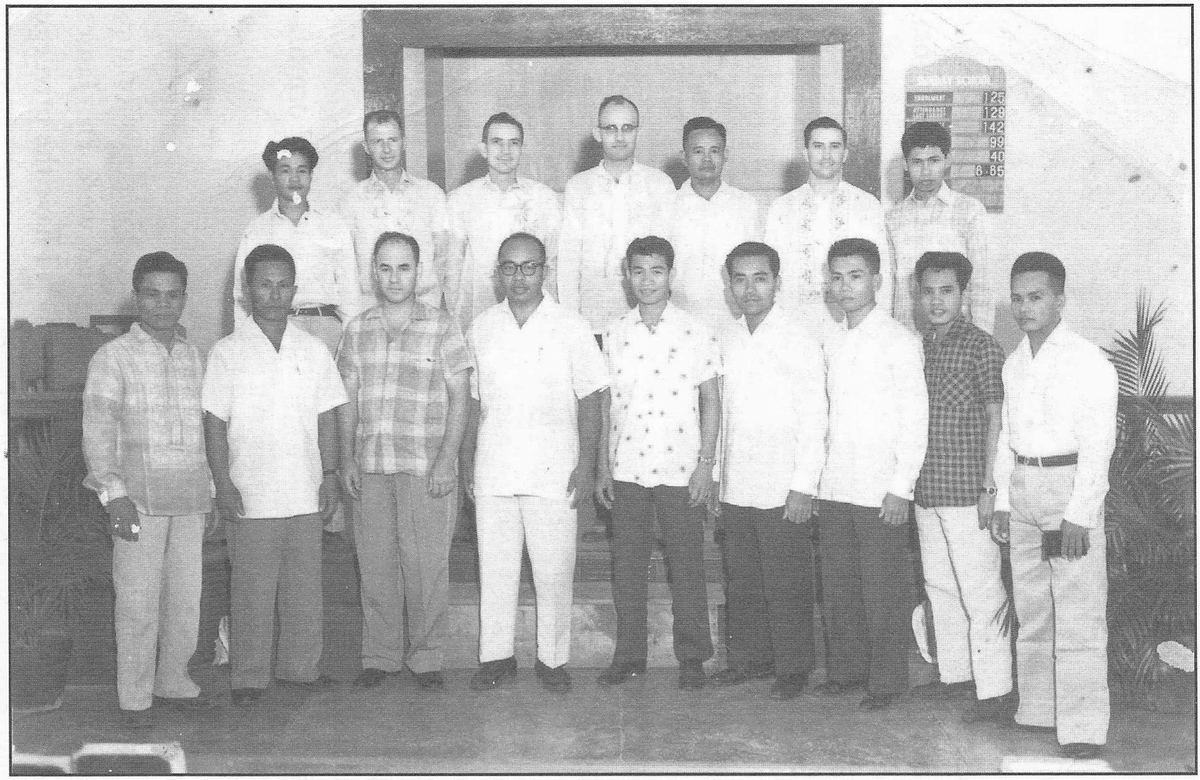
As the Southern Baptist work progressed, more missionaries came. Notable among those who visited were Dr. James Cauthen and Dr. Winston Crawley which I have the privilege to interpret for. Actually, some were on their way to China and were temporarily hindered due to the volatile political situation there. Soon they found themselves involved in the work among Filipinos. Rev. Bill Solesbee, coming from Dagupan, and Dr. Clyde Jowers and their families were part of the next wave of missionaries. Single missionaries Virginia Parsons, Mary Lucille Saunders, Virginia Mathis, and Elaine Crotwell also came.
Miss Parsons, an army nurse during the war, eventually settled in Mati, Davao. Miss Saunders and Miss Mathis left for Manila. Miss Crotwell stayed behind in Davao City and was a tremendous help in many ways. Miss Crotwell, who was dearly loved by the Davao brethren, mirrored in her life the characteristics of a great servant of God. This great lady of God left an indelible mark on the hearts of the youth, especially on my five children.
The Cotabato Experience
Sometime after the Davao work got underway, there opened up another opportunity of ministry for Rev. Jackson. A core group was slowly but surely developed in Cotabato City. Rev. Jackson patiently nurtured this pioneer group the way he nurtured the Davao group, leading them from spiritual infancy to spiritual maturity. Prominent in the Cotabato ministry was the Sims family. Slowly, the work evolved into the Cotabato Baptist Church. In time, this pioneer church reached out into the outlying areas of the province and became the cornerstone of the Southern Baptist ministry in this Muslim inhabited province.
First Youth Conference
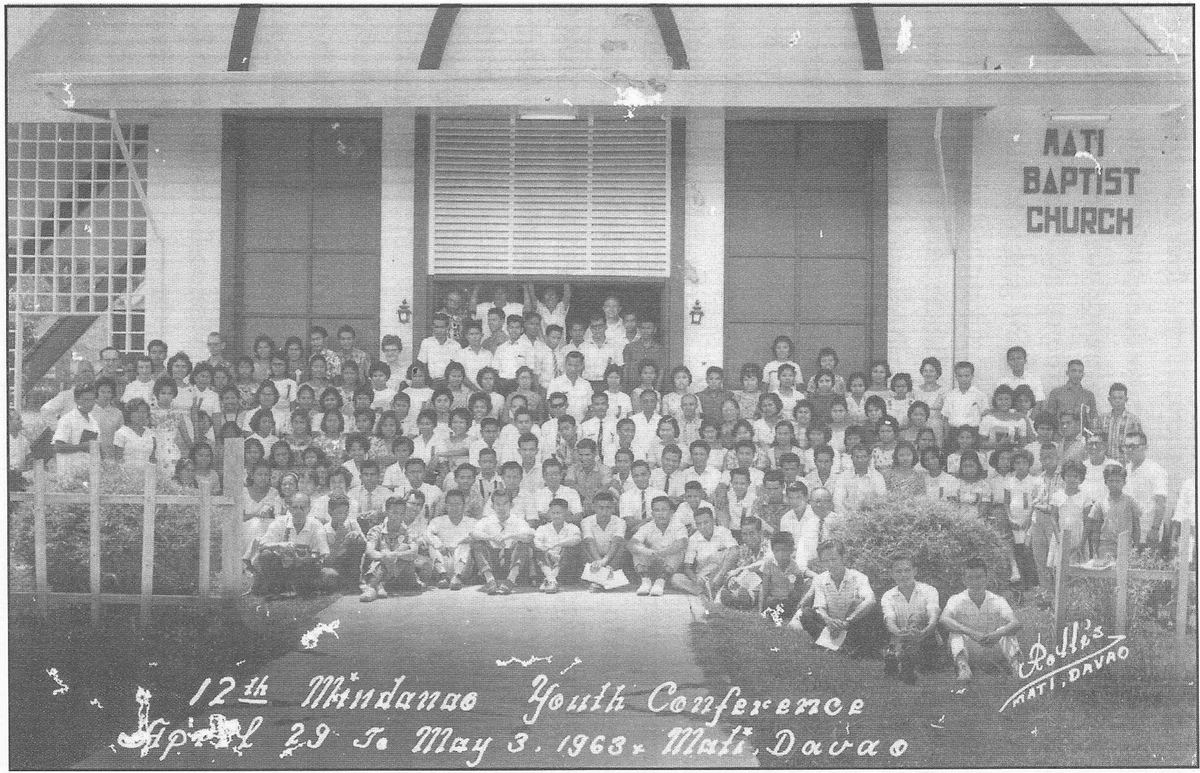
Towards the end of 1951, a Youth Conference for the Davao and Cotabato Southern Baptist youth was organized. The prime movers of that first Mindanao Youth Conference were the single missionaries mentioned above. These four ladies wanted the youth from the few churches to come together for spiritual bonding. The venue of that conference was the Legaspi church with Dr. Robert Ricketson as the speaker and this writer as interpreter. Watching the few youths gathered there, I saw in an unmistakable way the dawn of a strong and highly promising denomination. I told myself, “With these few young people, the future looks potentially viable.” As a pioneer worker, those were gratifying moments of triumph and relish. Those were moments many would have desired to experience but only few will ever succeed.
As a result of that first Southern Baptist Youth Conference, some of our young people were encouraged to go into full time Christian service. Foremost among these young people was Rolando Raganas, who would later become a pastor of Immanuel Baptist Church and much later the first president of the Mindanao Convention of Southern Baptist Churches.
Purchase of Land and Construction of a Building
The leaders of the fledgling work saw at that early time the potential of the ministry. They saw through the eye of faith the coming high tide of God’s working among the Filipinos and greatly anticipated the day. So, the leadership requested monetary help from the Foreign Mission Board through Rev. Jackson. The FMB in turn, sensing the great spiritual harvest, acted quickly in approving the request. Consequently, land was purchased on Jacinto Street, and the construction of a church building we could call our own was started. Engineer Gaudioso Tionko volunteered to supervise the construction of the new building for free.
Pilgrims No More
Sometime in 1952, the Filipino congregation moved out of the rented facility in Legaspi Street and formally occupied the new church building on Jacinto Street. The building was dedicated with Dr. Winston Crawley as the guest speaker. The new church, located at 307 Jacinto Extension Drive, was ideally called Immanuel Baptist Church. Without a doubt, the name we chose for the young church was indicative of what the group went through and how God at His appointed time, intervened through the Foreign Mission Board of the Southern Baptist Convention. Immanuel truly was “God with us” as we crawled, walked, and stumbled our way out of the Independent Evangelical Church into the warm and caring arms of Southern Baptist Missionaries.
Which Way To Grow
After the new building was dedicated, more souls were won to the Lord and eventually added into the church roll. Had we reached the end of the journey as a church? Destined to live happily thereafter? Was it time to relax and enjoy? It was not destined to be so. Just as we were settling into normalcy, Rev. Jackson’s furlough was almost due. What troubled us the more was the fact that Rev. Jackson had indicated his intention to settle in M’lang after the furlough. Soon we would need a new pastor to lead the group.
Because of the impending leave, the church decided to call Rev. Solesbee as pastor, with the expressed understanding that Mrs. Ella Ruth Solesbee would actively involve in the church ministry, especially in the field of music. Indeed many of the young people were inspired to learn the piano. Eventually, and with much patience, some of these young people became musicians themselves: Rolando Raganas, Uralina Fortuna, and Deborah Hope Onggao. The church, having received so much from God through the Jacksons, expressed in no uncertain terms their sincere and utmost appreciation for the great and noble accomplishments Rev. and Mrs. Jackson had done for and in behalf of the church.
After bidding good-by to the departing missionary couple, the church faced the task of welcoming the new missionary-pastor. Everyone was excited since the prospect of having a new pastor means facing a new dimension in our Christian experience. As the bond of trust and support was being developed between the church and the new pastor, everyone seemed to be treading with extreme caution. From all indications, he seemingly did not have the stability and confidence of Rev. Jackson. The new pastor and members endeavored at great lengths to make the transition smooth. As the walls of distrust crumbled one after the other, the church found out how amiable and genuinely concerned the couple was for the church. The Solesbees had two children, Steve and Carol.
Shortly thereafter, another problem came into view. The leaders were confronted with a question: “Which is the way to grow as a church?” How could we better impact the city with the gospel? Two schools of thought as to which way to grow were thrown into the arena of consideration. These two schools of thought were distinctly variant philosophies in church planting and perhaps in church growth.
One group in the church body espoused the idea that the Southern Baptists in Davao City should have one large central church. At that time, the Davao Gospel Center of the Christian Missionary Alliance group and the United Church of Christ were the two large congregations in the city. Both had large church buildings. There is no doubt these two denominations influenced the first group. The idea was for members, regardless of their location and proximity, to converge into the central place for worship, prayer meetings, fellowships and such other activities as were relevant to the total church life. This is almost similar to the Roman Catholic concept of what the local church is.
The other concept, of which this writer and Bro. Eduardo Fortuna were proponents, suggested that multiple churches should be simultaneously started whenever and wherever the opportunity might be presented. The idea was to build churches where the new believers were situated. Hopefully, the local church could efficiently reach out into the community in a more interactive way. In effect, the burden of growth was reduced into the smallest possible scope, which would logically be more practical in many ways. We argued that the simultaneous evangelization of the city would allow the denomination to cover more ground.
After months of friendly discussion, wise counsel, and careful consideration, a special meeting of the church was called to resolve once and for all the question of which way to grow as a church. Both sides of the issue were formally and prayerfully presented. The issue, crucial to the group’s growth, was put to secret vote, which is the Baptist way of conducting official business. The whole membership, true to their belief in the priesthood of the believer, were asked to participate in defining God’s will for the groups’ growth process. After the votes were counted, the second philosophy had won. The church decision was by and large indicative of the group’s right understanding of what a local church is all about. Thereafter, the church took it as God’s will for the group to tread in this direction.
To date, the experience of the United Church of Christ in the Philippines is a classic example of how weak and deficient a centralized church is. Without a doubt, God wanted Southern Baptists to take the higher ground in church growth. Today, while Southern Baptist churches are mushrooming everywhere in the city, the United Church of Christ in the Philippines has only a few magnificent buildings that serve a handful of members. There is no doubt that relying on and consigning church growth to a large building is not enough to sustain a believer’s spiritual growth.
Indeed, many factors can stand between a Christian and his spiritual maturity: distance, time, and finances may well take their toll in the long run. Today, the Southern Baptists are within the top ten leading denominations in the Philippines in terms of membership. There is no doubt that the decision made in those early days was a crucial factor in the group’s rapid growth.
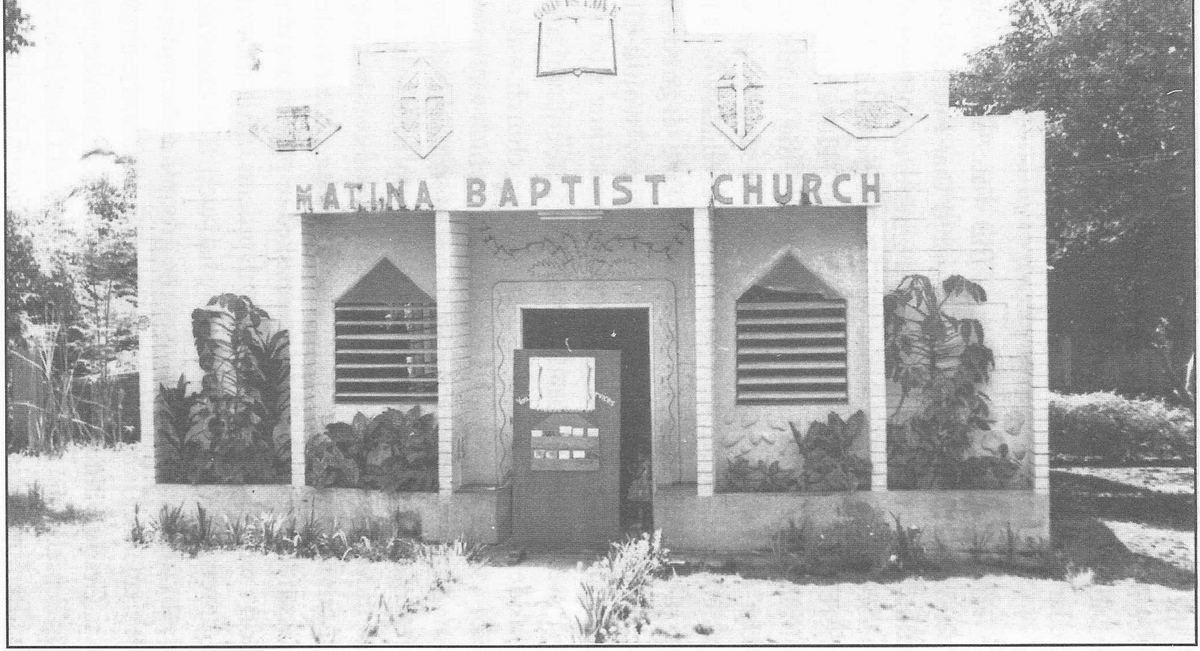
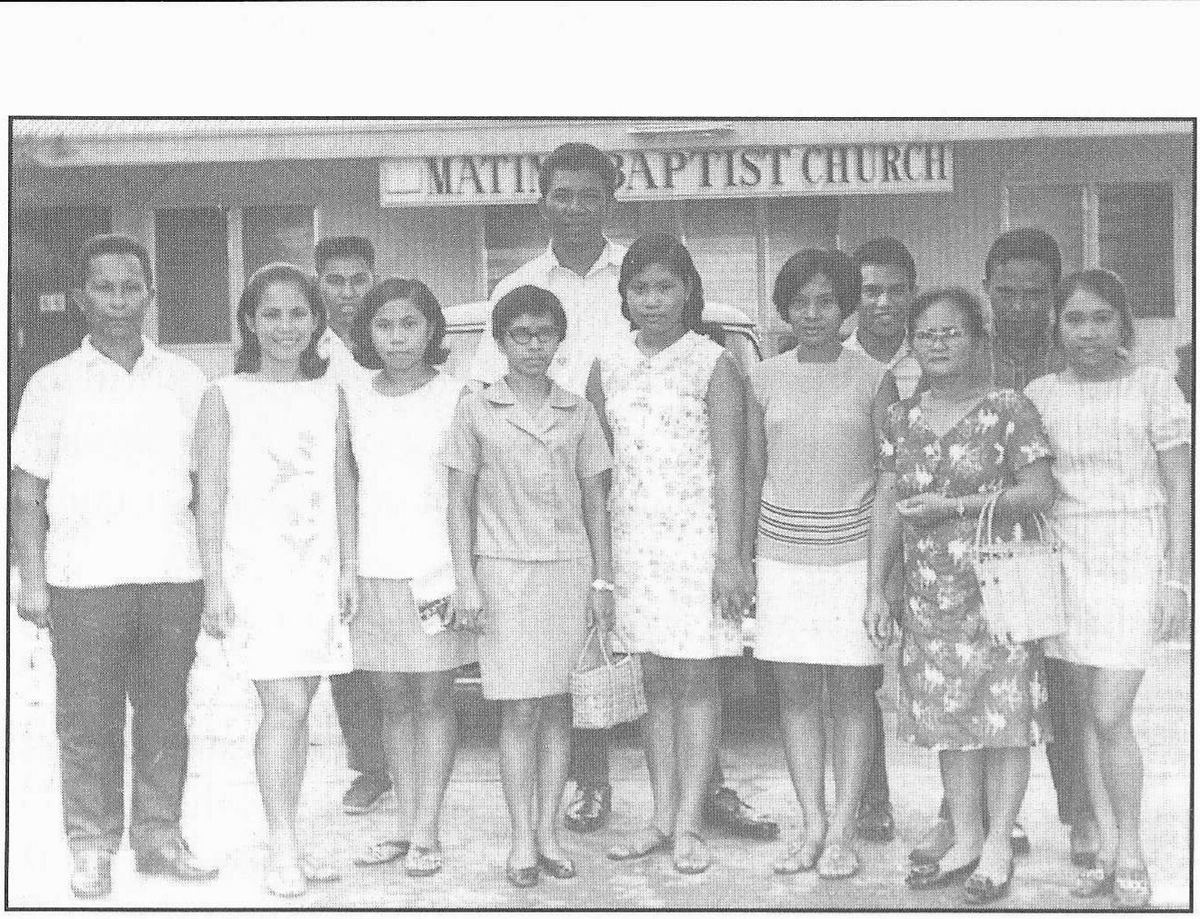
After that momentous decision, a church was started in Bucana with Bro. Eduardo Fortuna as the leader. Bro. Severo Beciera went back to Bunawan and started a work in that district. This writer was given the enviable task as a roving worker. At times, I was sent to Lasang, at other times to Babak Island, occasionally to Talicud Island, and sometimes to Matina, since these places were playing host to new Southern Baptist work.
There were times when I was home only two days and out on the mission field five days a week. Eventually, Matina called me as their full time pastor. Honestly, Matina was a struggling group then, but as God took full control of the ministry, it slowly impacted the community with the gospel. Sunday afternoons, children’s Bible classes were conducted in different neighboring places.
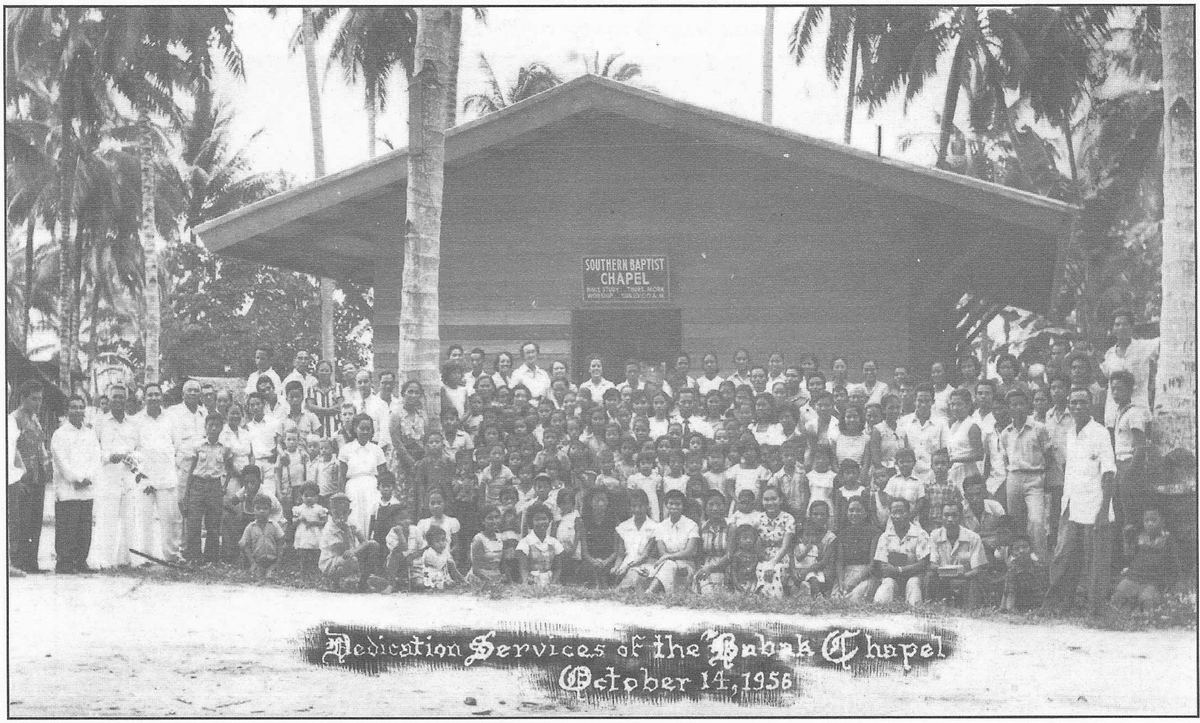
Mati Baptist Hospital
In the early stages of the denomination’s work in Mindanao, the Mission explored the possibility of starting a medical ministry. A plan was made to build a hospital in Tagum, Davao. However, when the plan was shared with some Baptist groups in the area, they reacted vigorously against the mission’s plan. Dr. Cauten, a good-natured and peace-loving man, decided to abort the plan for the sake of peace. The controversy paved the way for the mission to set its sight on Mati, Davao.
The Tagum rejection turned out to be a blessing for Mati. After an ocular visit was conducted, the Mission realized the need in Mati was greater than in Tagum, and the prevailing conditions were more conducive for a medical ministry. Back then, the only viable way in and out of Mati was through the sea, and the mode of transportation was the ship. Sadly, it was not everyday that a ship either came in or left the port of Mati. In times of medical emergencies, therefore, people in need of medical attention were at a great disadvantage. Like in the Davao City experience, God was preparing for the work in Mati.
Indeed, a concerned family made two hectares of land available as a location for the new ministry. The first facility built was a ten-bed capacity clinic. Originally, the ministry was called Mati Baptist Clinic. It was a two-story building. The patients occupied the basement, and the second floor was a housing facility for some personnel. This humble facility paved the way for the initial spiritual onslaught into the very heart of a religious community, which did not know Jesus in a personal way.
The clinic’s first medical director was Dr. Augusto Resurrection. This volatile, yet highly dedicated man was faced with the daunting and delicate task of building a bridge of trust with the community. It would be a trust anchored in love, concern, and care.
Overall, however, the burdens of nurturing and guiding the new ministry, fell squarely upon the shoulders of Miss Victoria Parsons, Administrator of Mati Baptist Clinic. Through her astute management skills developed as an army nurse during the war and matched by her passion for the lost, Mati Baptist Clinic slowly became a symbol of love, hope, and faith in the entire province. Eventually, the ministry evolved into what was known as Mati Baptist Hospital.
Mrs. Joaquina Pada provided the structured spiritual component of the budding ministry. Later on, she was officially appointed as chaplain of the clinic. Out of the medical ministry’s impact and the dedicated follow through of Mrs. Pada, Mati Baptist Church was born. Mati Baptist Church became the catalyst in the saturation of the province with the Good News of Jesus. Most of the leading towns in the province were hosts to either a Southern Baptist church or mission point. Today, Southern Baptists continue to reach out into the fertile barrios and barangays, sowing the seeds of God’s salvation.
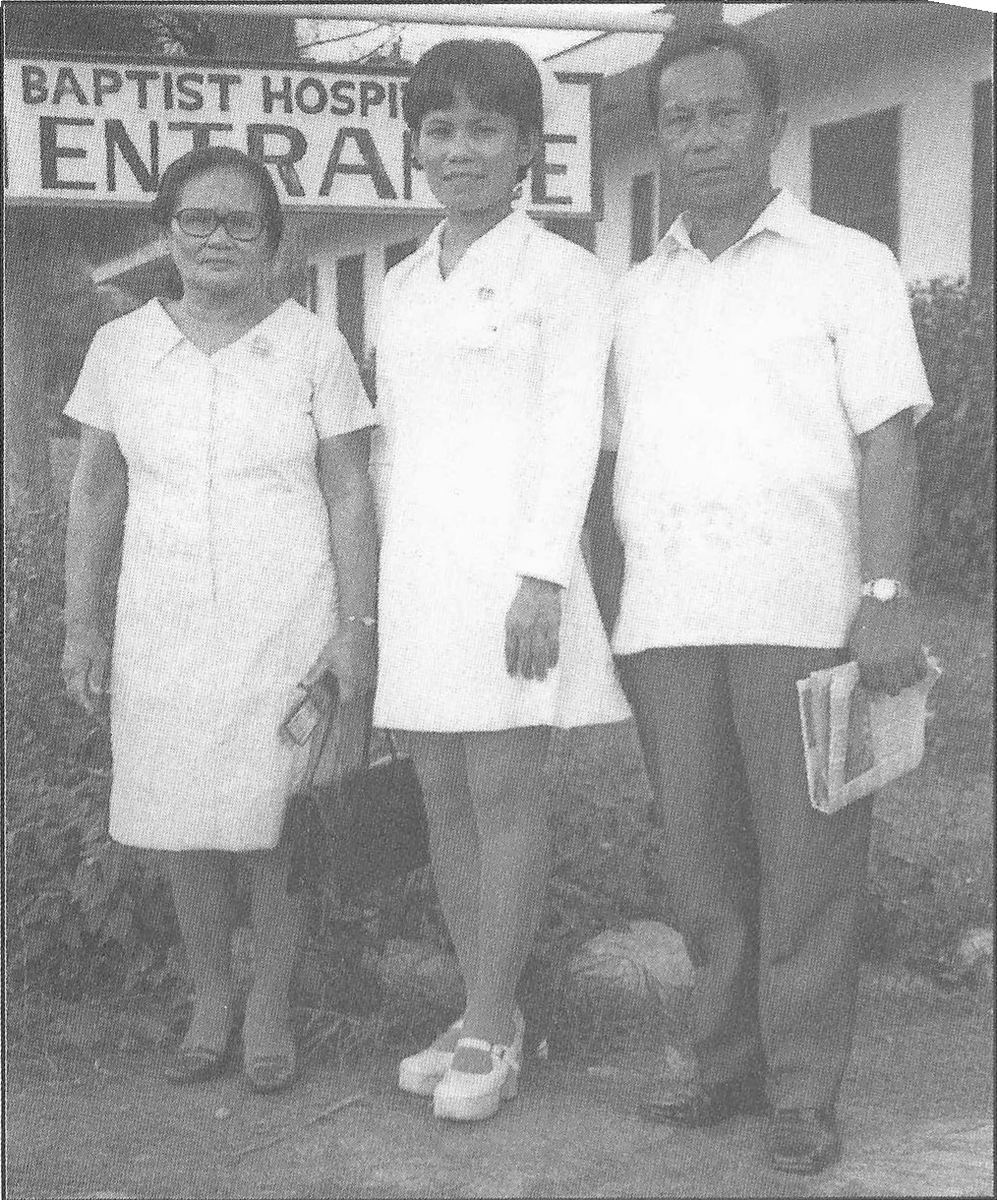
The Davao Association of Southern Baptist Churches
Someone poignantly said, “No man is an island.” Without a doubt man is a social being. As a social being, man needs fellowship, bonding, and interaction with his fellow men. Since the church is made up of individuals who are social beings, the guiding missionaries encouraged the few existing churches to bond with one another. As a result of this, the Davao Association of Southern Baptist Churches, the first such organization in Mindanao, was formed.
As part of the organizational process, officers were elected at the same meeting, leaders who would guide the organization to greater heights of growth and service. It was a humbling experience and at the same time a great privilege for this writer to be elected as the first moderator of the Davao Association of Southern Baptist Churches. The vice-moderator was Mr. Pedro Ilustre from Mati. Mr. Dominador Bardoquillo was the secretary.
The once isolated break-away group had found not only people of the same faith, but more than anything else, fellow believers who adhered to the time honored Biblical principle that a church is a dynamic body whose growth depends to a large extent on the kind of latitude its members are allowed to express and experience within the life of the organization.
The pioneer churches that constituted the Davao Association of Southern Baptist Churches were Immanuel Baptist Church, Bunawan Baptist Church, Matina Baptist Church, Zion Baptist Church, Mati Baptist Church, Lupon Baptist Church, and perhaps one other church, which I cannot remember at this writing. How true is the statement, “Big things always have humble beginnings.” The Southern Baptist constituency in Davao must always bear in mind that Southern Baptists as an organization have gone through the needle’s eye to be what it is today. I urge the younger leaders to build upon that humble beginning which the pioneers laid. God is not done with us yet. There are more mountains to climb.
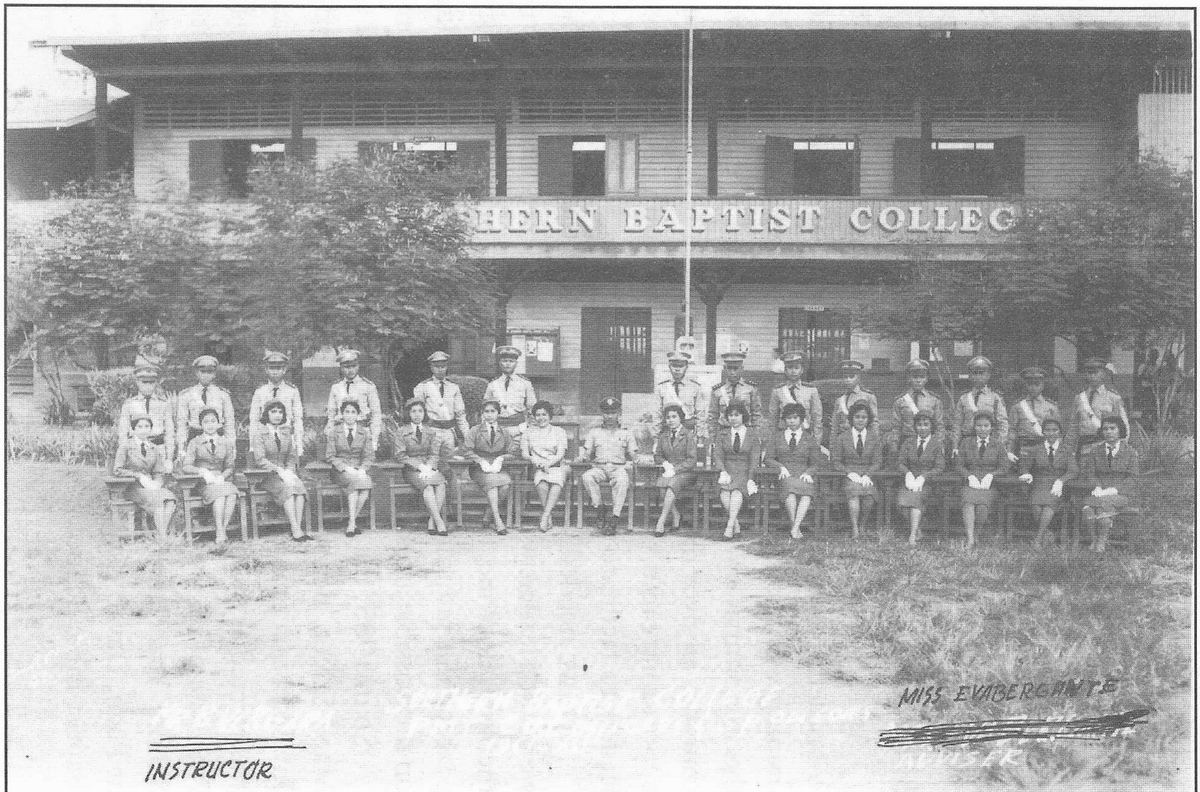
Southern Baptist College
On the western side of the island, God was stirring something else that was destined to be a landmark in another field of ministry which Southern Baptists would later be known. A Christian school in the town of M’lang, Cotabato, was on the verge of closure due to financial constraints. However, some residents were very concerned about the situation. Foremost among these were Mr. Loreto Joson and Mr. George Gauran. The potential of the school as a vehicle towards the evangelization of the town weighed heavily on their hearts. Mr. and Mrs. Joson were the donors of the property the embattled school was occupying. Mr. Gauran was a retired educator who spent his teaching days in the public schools.
M’lang was an agricultural-based community. The livelihood of many depended to a great extent on the performance of the land. When the harvest was good, everyone was happy. During those times when the land performed dismally, the whole community felt the pinch of the failure. This had a domino effect on the students. It translated into an inability to meet the financial obligations with the school. When the students were unable to pay their bills, the school could not pay the salaries of the teachers. All of these circumstances together formed the anatomy of failure and the potential closure of the school.
However, Mr. Gauran and Mr. Joson were not yet ready to raise the white flag of surrender. They wanted to explore all possibilities available in order for the school to continue functioning. They were not even ashamed to shed tears of disappointment while relating to me the deplorable condition of the school. With great urgency, they requested me to introduce them to the Southern Baptist missionaries in the city. Hoping that the missionaries could empathize with them and see the great loss of Christian witness in case the school closed down.
Unfortunately, I had another pressing appointment on that day of our meeting, so with much regret I just gave them the address of the Mission House. I urged them to personally present their need to Rev. Jackson, having the confidence that they could proficiently express what was in their hearts. Knowing the Jacksons myself, understanding how approachable they were and how they loved the Lord and his work, there was no reservation in my heart that the ever-merciful God would be there to intervene. True to my expectation, the Foreign Mission Board of the Southern Baptist Convention came to the rescue of the school.
Today, it is an open book that the Southern Baptist College stands as an indomitable testimony of how God, through the Southern Baptist Foreign Mission Board, saved a school from bankruptcy. It is not an overstatement to mention that the Southern Baptist College is a symbol of quality education. The school has also been an oasis of an endless flow of young men and women who have gone into full time Christian ministry and invested their lives in the noble service of the Master, the Lord and Saviour Jesus Christ. Out of the Southern Baptist College ministry came M’lang Baptist Church. From this pioneer church, M’lang and the outlying areas were almost saturated with the gospel.
It is a living testament to the school’s achievement that through its trained personnel and creative resourcefulness, it has attained a coveted status. The school has become Filipinized in the sense that it is managed and financially supported by Filipinos.
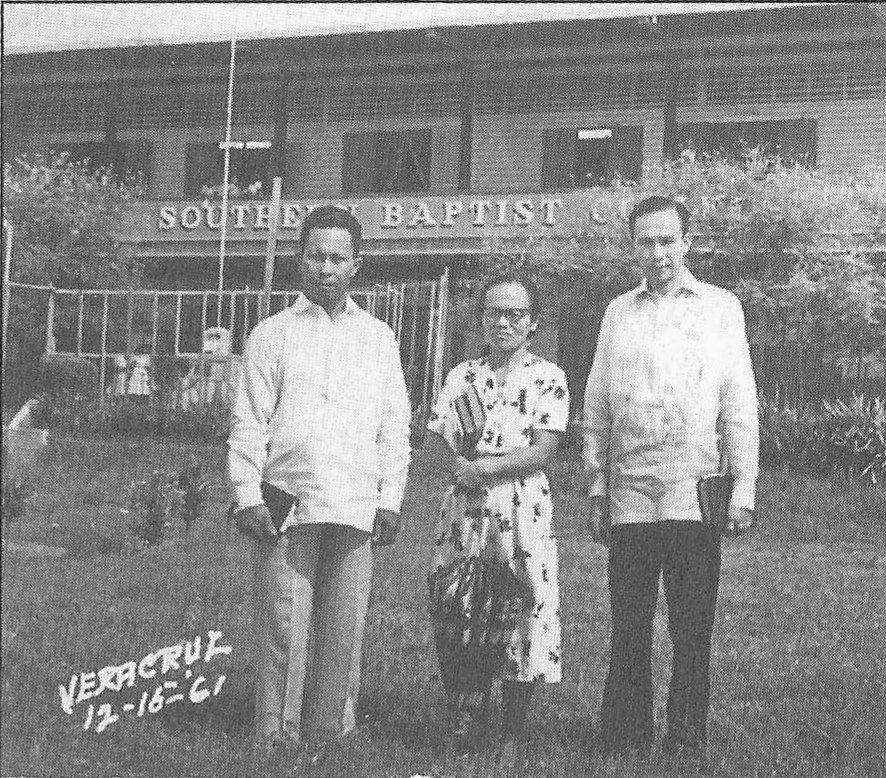
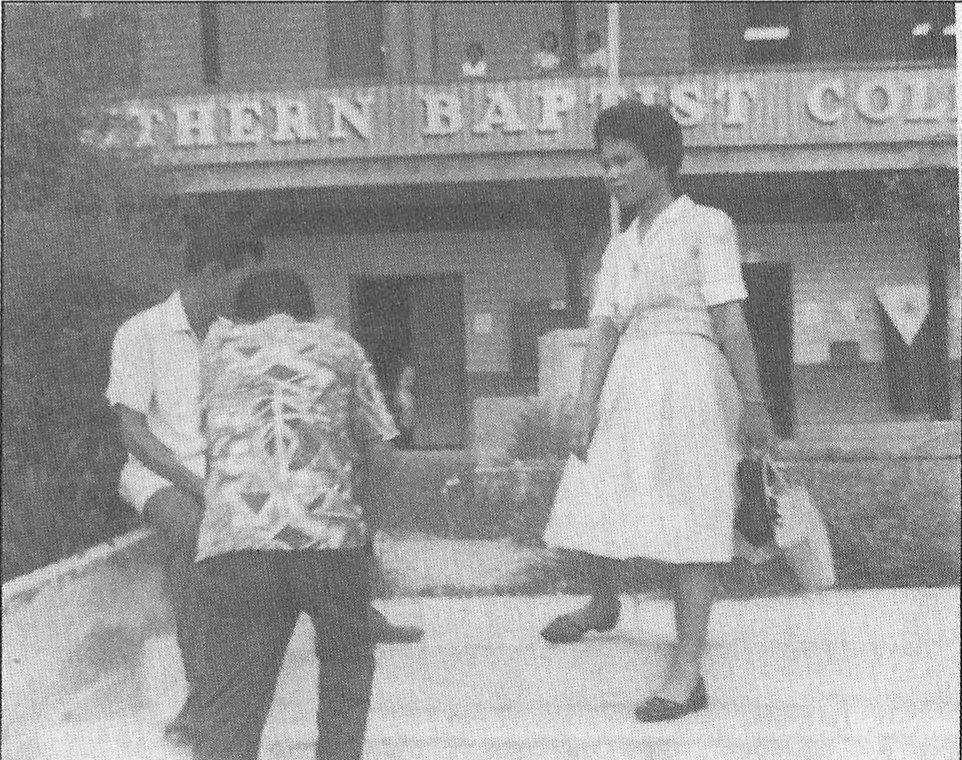
Mindanao Baptist Bible School
As the Southern Baptist ministry was experiencing an unbridled growth in the mid-50’s, I felt that some leadership training was needed to prepare us for the potential growth of the denomination. Because the group had decided to start churches all over the city and perhaps even beyond when the opportunity came, there was a need to develop a pool of trained leaders to facilitate the growth plan.
Yet, we needed not just leaders. More than anything else, we needed leaders whose training was based on Southern Baptist theology, doctrine, beliefs, and conviction. For the sake of unity, peace, and tranquility, we did not see the practicality of relying on the possible affiliation of pastors from other denominations.
So in 1955, the Davao Baptist Bible School was opened at Mapa Street, near the Davao City High School. Dr. Clyde Jowers, a quiet man of great intellectual prowess and capacities, was elected as the first director. Mrs. Angeles Pacificar-Onggao (the wife of this writer) was the first housemother of the Bible School. Years later, the Mission was able to purchase a property at Puan, Davao City and the name was changed to Mindanao Baptist Bible School.
There is no doubt that quality of leadership in a denomination will translate into quality leadership in churches, and therefore, galvanize more, the tremendous potential of the group to achieve the Great Commission. Consequently, the mushrooming churches all over the island justified the pioneer’s desire for a truly Southern Baptist Theological School to be started.
Chapter Two
The 60’s: Getting Better
Pages 46–53
A basic principle in life is, “Where there is life there is growth.” Growth comes in varied forms. It can be horizontal, vertical, or in terms of weight and number. There is no mistaking in the 60’s that the Southern Baptist denomination was alive. And since it was alive, it was growing. New churches, the Mati Baptist Hospital, the Southern Baptist College, the Mindanao Baptist Bible School, and the various associations of churches were increasing in strength and effectiveness. There was no stopping the growth of the mustard seed that had come out of the Independent Evangelical Church.
The Bible clearly states, “Unless the seed falls to the ground and die, it cannot reproduce more of its kind” (John 12:24). The pioneers learned that when a door is closed in one place and time, God opens other doors at other times and places, obviously for His glory and honor.
The Mindanao Convention of Southern Baptist Churches
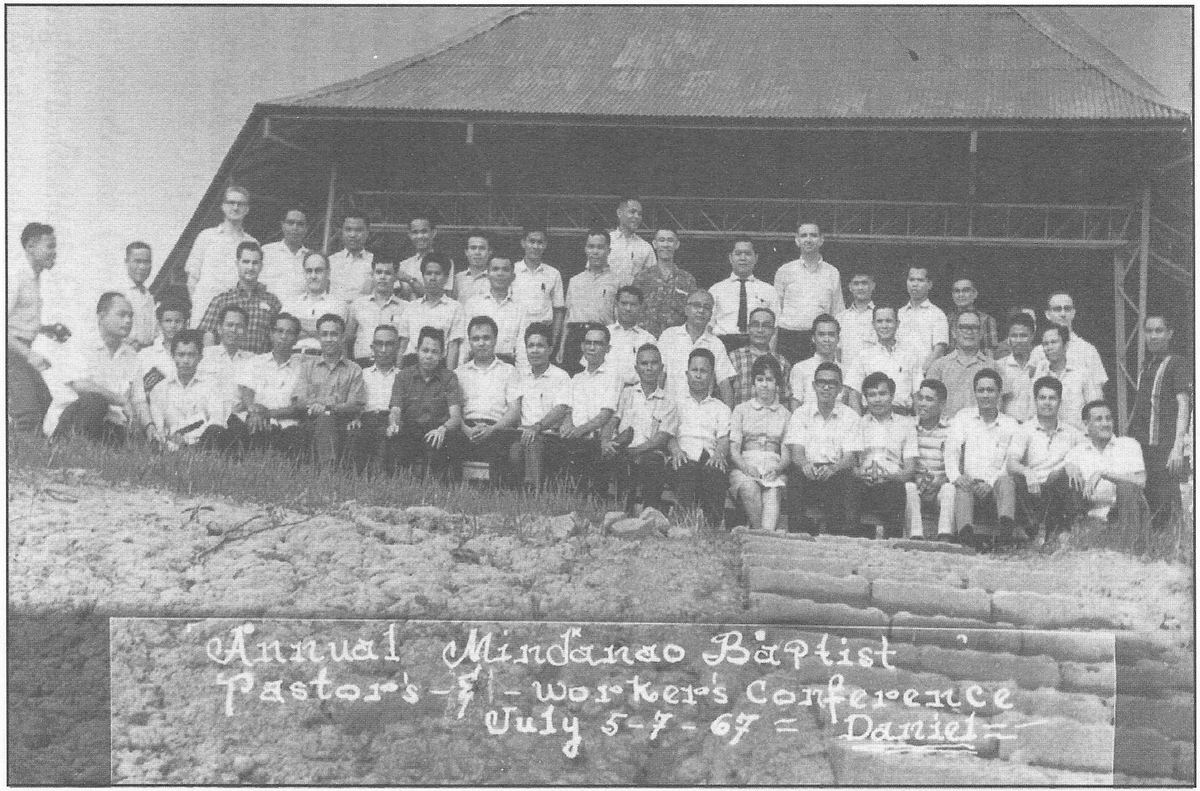
The decade of the 60’s offered growth and progress. In ways only God can ever explain, churches affiliated with Southern Baptists just kept popping up all over Mindanao. While it is true there existed associations of Southern Baptist Churches on the island, the desired fellowship of all believers of the same religious persuasion was in many ways limited. Neither the good news of triumphs and victory nor the sad news of trials and persecution reached the attention of the entire organization. As a result, the individual members of the organization could not rejoice with the victories nor have opportunity to pray for the needs and trials of others. Furthermore, there was need for the entire organizational structure to come together to analyze, plan, and tackle the challenges of the 60’s. Hence, the Mindanao Convention of Southern Baptist Churches was birthed.
Rev. Rolando Raganas, a young pastor of the then fledgling Immanuel Baptist Church who had received his ministerial training from Philippine Baptist Theological Seminary in Baguio, was elected the first president of the Convention. Rev. Jessie Jimena was the second president and this writer was elected as the third president.
For the first time, the Southern Baptist ministry had attained some degree of unity in the midst of diversity. The Mindanao work was one as a convention, yet many as associations, and even more as indigenous and independent churches. The organization of the convention promised more involvement, participation, and insight from the total membership as they worked toward the fulfillment of the Great Commission. This was a dream come true for the pioneers.
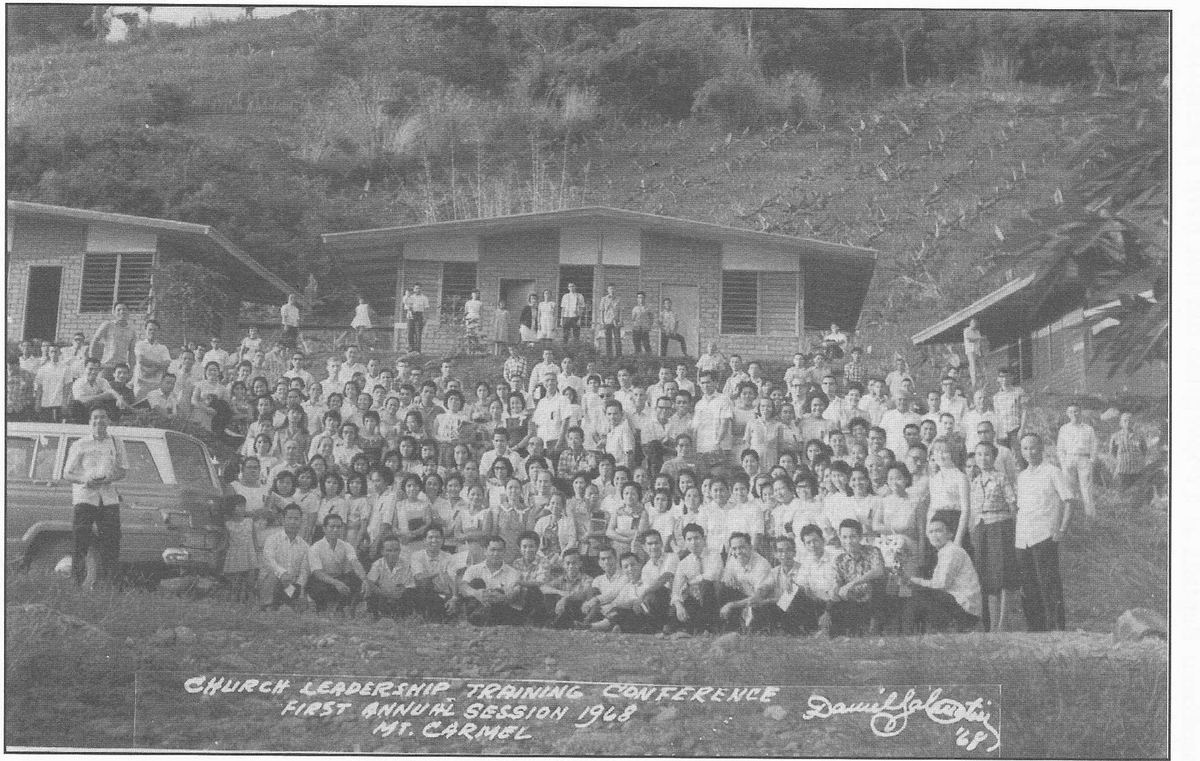
Mt. Carmel Baptist Assembly
As the Southern Baptist organization continued to get bigger as an agency and as an instrument of God’s saving will, its needs continued to get bigger too. At that point in time, Southern Baptists as a convention did not have a permanent gathering place. As a matter of fact, the Mindanao Baptist Youth Conference was moved from place to place, where facilities were present and available.
Sometimes, the youth conference was held in Davao City. At other times it was in Cotabato area. The pendulum went back and forth so much that I had the feeling it was breeding confusion among our youth. Even the meetings of the Mindanao Convention had to go through the same process. The spirit of transience prompted the Mission to move one step higher up the ladder of denominational structure. The Mt. Carmel Baptist Assembly Campground was purchased to meet some of the pressing needs of the organization. The Mission did its best and pushed for the development of the basic needs of the camp. For the first time, the spirit of permanency hovered over the denomination.
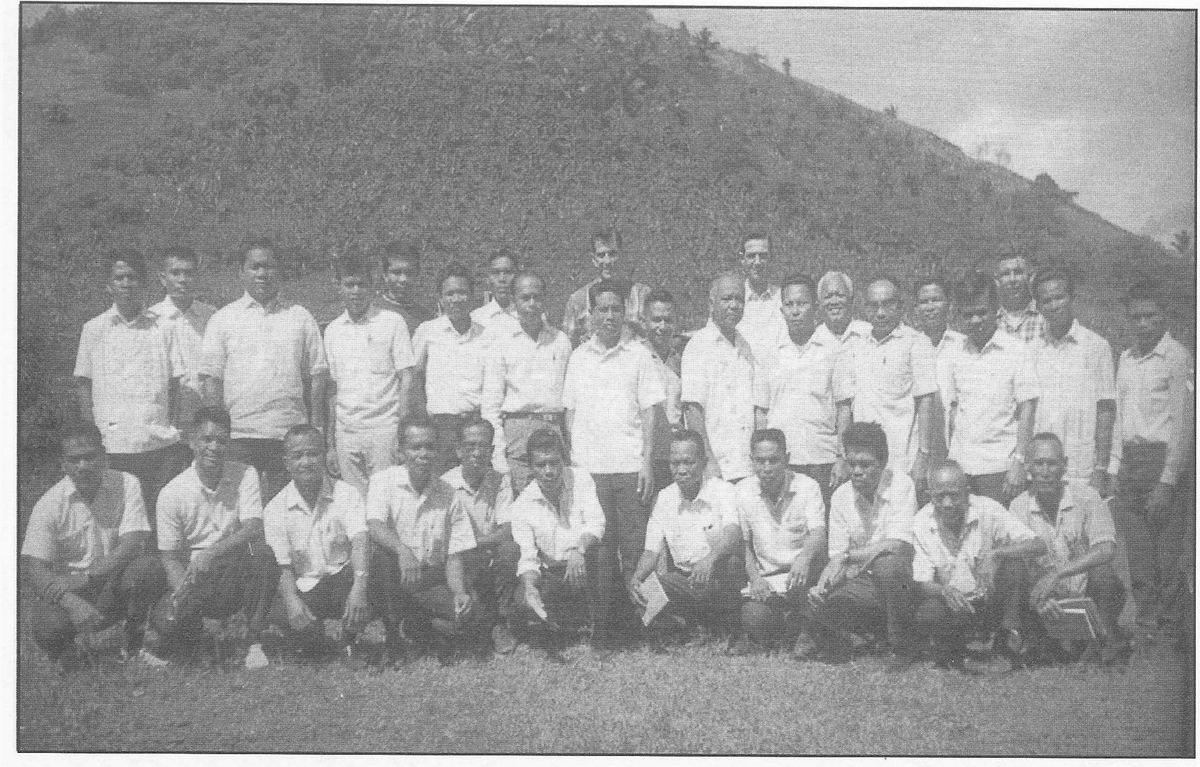
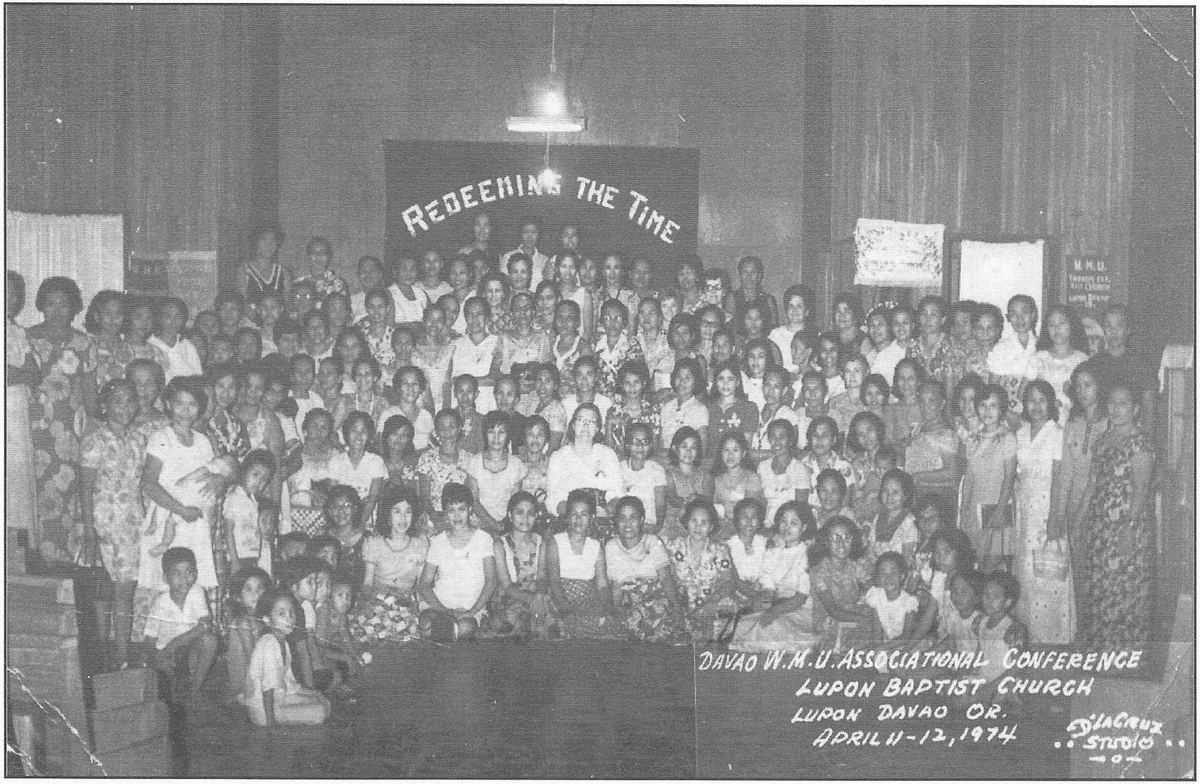
From then on, the Mt. Carmel Baptist Assembly played host to every Mindanao convention of Southern Baptist Churches’ conference, the Mindanao Baptist Youth Conferences, a host of other leadership trainings, music workshops, and Women’s Missionary Union conferences. The sprawling land and verdant lush green grasses and shrubs created an amiable atmosphere of tranquility and a homey, though away from home feeling.
Truly, as in the days of Elijah, Mt. Carmel defined in a clear and unmistakable way God’s peace that passes all understanding as well as God’s triumph over man’s self-imposed sufficiency, arrogance and pride. At Mt. Carmel (1 Kings 18:20–40), the whole constituency could be reinvigorated, recharged, refocused, and reminded that God is still in control of the affairs of men.
More Missionaries Came
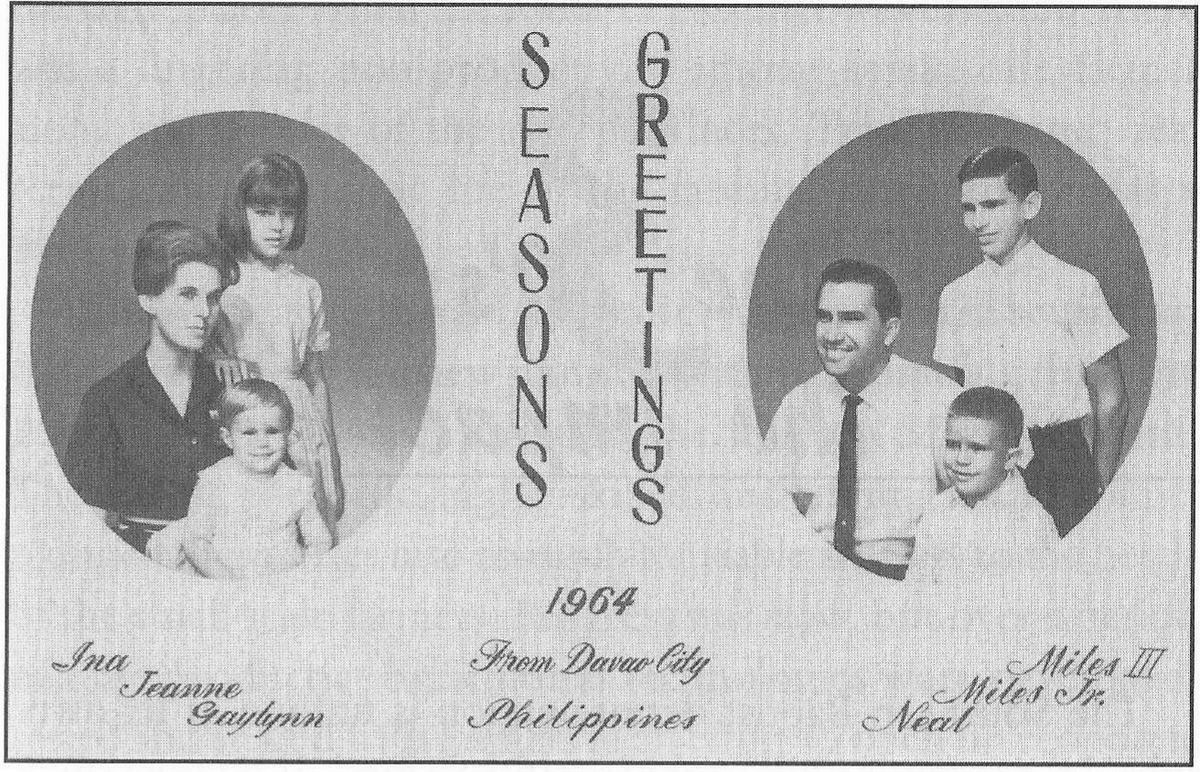
As the Southern Baptists in Mindanao grew by leaps and bounds, the need for more missionaries became an utmost urgency to the organization. A parade of well-trained and able missionaries streamed their way to Mindanao to meet the challenges of time. Rev. Harold Matthews and family, Rev. Walter Hunt and family, Rev. James Lochridge and family, Rev. Leroy Benefield and family, Rev. Charles Miller and family, Rev. Robert Nash and family, Miss Faye Tunmire, Rev. Miles Seaborn and family, Rev. Leslie Hill and family, Rev. James Slack and family, Rev. Harold Watson and family, Rev. Harold Spencer and family, Rev. James Moorehead and family, Miss Cleo Morrison, Miss Dee Oliver, Rev. Ted Badger and family, and Rev. James Peden and family were some of the missionaries who came to minister to us.
Chapter Three
The 70’s: The Impact
Pages 54–56
The Southern Baptist denomination is unique in its own right. Its mission’s philosophy is multi-faceted. It is concerned not only about the spiritual needs of man, but also of his physical and material needs. It is committed to the development of the total man. The example Jesus set as recorded in the Gospels perhaps set the tone for this philosophy. It is not a secret that Jesus healed the sick, fed the hungry, and consoled the hurting. Yet at other times, he confronted people with their sinfulness and the need for them to repent of their sins. In the 70’s, more than at any time, Southern Baptists were ready to make a memorable imprint with the Gospel upon the vast and fertile mission fields of Mindanao.
The Mindanao Baptist Rural Life Center
The Mindanao Baptist Rural Life Center is situated east of Mt. Carmel Baptist Assembly Facility. This mission-supported facility, together with the Mt. Carmel facility, is situated not far from the boundary of Davao del Sur and North Cotabato. This is a strategic location. There is no doubt that the Mindanao Rural Life Center was the right ministry at the right time and the right place. When the Rural Life Center was initiated, there was a lingering non-productivity among small-scale farmer along the border of the two provinces. Translated into real terms, the economic life of the farming community was a struggle.
The Mindanao Rural Life Center lost no time in setting up the machinery of the new ministry with seed funding from the Baptist World Alliance through the Foreign Mission Board. The young, energetic, highly-skilled, and committed personnel plunged themselves into research for viable answers to the needs of the small scale farmers. Progress was slow, but over a period of time productive agricultural technologies were developed, tested and shared with farmers in an effort to open up economic opportunities for them and their families. In time, the benefits were not limited only to these two provinces. The whole island of Mindanao became a beneficiary of this socio-agricultural ministry.
The process that brought about this wonderful ministry was tedious. Patience, love and concern were virtues that consumed the hearts and minds of the staff and enabled them to accomplish a difficult task. Most of all, the unwavering commitment and leadership of Rev. Harold Watson, the first Director of the Rural Life Center, set the tone for the national and international accolades that came Rural Life’s way. Rev. Harold Watson received an international recognition for the indigenous agricultural technology developed in Rural Life Center called S.A.L.T. (Sloping Agricultural Land Technology).
Outside of Mt. Carmel and the Mindanao Rural Life’s perimeter sits Kinuskusan Baptist Church. There is no doubt that this church is the crowning accomplishment of these two Mission’s ministries. This church is reaching out to surrounding communities sharing the gospel through agricultural technologies developed by the Rural Life Center. Today, the once arid places are now flowing with spiritual milk and honey in the person of the Lord Jesus Christ as well as physical food for the hungry.
More Missionaries Came
The impact of the 70’s saw the coming of a new business manager for the Mati Baptist Hospital in the person of Rev. Wayne Gresham. Dr. Charles Norwood was added to the medical staff of the hospital. In addition to his medical practice, Dr. Norwood was very much involved in the missions program of the Davao Oriental Association of Southern Baptist Churches. As a matter of fact, he frequently visited churches and extended medical services to the whole community where the church was located. He was a hands-on kind of medical missionary; this endeared him to the whole province.
Mindanao Baptist Book Store
Southern Baptists, without doubt, are people of the book. This book is the Bible. As a religious entity, the Baptist authority rests not in traditions, creeds or practices, but only on the pure and undiluted Word of God, the Bible. To ensure a vigorous and spiritually healthy growth of the constituency, the Southern Baptist Mission opened a bookstore to bring people the latest literature in the field of theology, church planting, church growth, Sunday School, missions, stewardship, and music.
The churches in Mindanao welcomed the new ministry with open arms, for it promised a new dimension in the spiritual/intellectual growth of the denomination. Thereafter, bookstores were set up in strategic places in Mindanao to make sure every member would have access to the ministry.
Chapter Four
The 80’s: The Struggles
Pages 57–61
The decade of the 80’s was truly one of struggle. Actually, the seeds of the struggles had been sown a decade earlier. In the 70’s, the spirit of nationalism crept into the mainstream of the student movement. The Vietnam War, the alleged atrocities committed outside and inside the U.S. military bases, and the misconceptions that multi-national corporations are economic saboteurs fueled an already endemic situation among the “intelligentsia.”
The Media, through the power of the radio waves, newspapers and television, played without restraint the negative passion of student activism, which sometimes bordered on radicalism. Such an open display of emotional extravaganza had a downward effect on the population in general. The student activists’ goals, cloaked in the guise of nationalism, were the closing of U.S. military bases as well as driving multi-national corporations out of the country.
Effects on the Church
Without doubt, secular nationalism played and replayed beyond acceptable limits had its impact among the “religious activists” who, in spite of the right intentions, were inspired by “secular activists” to use the wrong means to accomplish the goals. This is not a matter of criticism, nor a matter of righteous partisanship, but merely an honest evaluation of facts in order to put into right perspective the negative effects of secular activism upon the church.
Demand for Filipinization
As a result of the above-mentioned events, talented and well-trained young leaders within the denomination started harping on the need for Filipinization. There is no debate on the merits of such aspiration when done in the right spirit and the right time. As an impartial observer to this latest development, from my point of view, the demand for Filipinization was merely an aftershock of the secular activism mentioned above, not a conscious effort by those concerned.
From everywhere, overtures for Filipinization incessantly were made. The desire of the national leadership to run denominational institutions started by the Mission was heart-warming. It was a signal that the younger leaders were ready to play in the big games of denominational management and bureaucracy.
However, for the sake of argument, the question must be asked, “Were we ready then for Filipinization? Were the churches, associations, the convention, and the membership in general really ready to foot the financial bill that goes with the privilege of managing denominational institutions?”
If my observation and perception was right, it is a sad commentary, in the midst of a skeptical and perverse generation, for the church to be influenced by secular-humanist aspirations. By and large, the Bible declares, the church should be “. . . the salt of the earth, . . . light of the world. . . .” (Matthew 5:13–16), a venerable example of moderation and truth.
It was my deepest yearning and desire as a pioneer that as a denomination, we would achieve the cherished and noble goal of Filipinization. Nevertheless, my dream was anchored in the hope that such an ideal be achieved at God’s right time. It had been our experience as a denomination from the very start that we never asserted and bullied our way into anything. God merely opened up doors of opportunities for us, provided human resources, and supplied financial support based on His timetable in every step of our journey and every turn of our struggle. There was and never will be a reason worthy enough to rock the boat of Southern Baptists as a denomination by forcing an issue far removed from its appointed time.
Today, we have the potential to take our dreams to its desired destination. We have the potential to turn our dream into reality. As a people and a denomination, we have the resources to build a truly “Philippine Southern Baptist” denomination. Only a molehill stands between our dreams and us. First, our weak financial base is an obstacle we have to surmount. Let us teach our people to give and give until it hurts. The values and attitudes that come to play in our decision whether to give or not to give our full tithe and our sacrificial offering is a practical barometer as to whether we have matured as an organization and thereby are ready for the big league. If we will not mature financially as an organization, then our dream of Filipinization will always be a dream. At this point in time, we have not yet reached the summit of “Mt. Filipinization” from where we can look down into the valley.
If we are willing to change our values and attitudes towards tithing and giving, then we have just laid the strongest foundation in our quest for self-government and Filipinization. If we are willing to change our values and attitudes, let us all be reminded that the manna that fell to the Israelites in the wilderness, the manna that fell to America and in other lands, has the potential to fall upon our land, too. Is it not true that God owns the cattle on a thousand hills, the gold and the silver and everything? When we have been able to develop our own financial resources through God’s effort and the urge for Filipinization resurfaces, let us go for it and just do it.
The Missionary Baptists
The decade of the 80’s saw the advent of another Baptist group, the Missionary Baptists. In their bid to achieve greatness and prominence, they took a shortcut. The leadership dangled the mighty PESO (Philippine currency) before the eyes of some Southern Baptist pastors, offering them money in exchange for their services.
Some of the pastors did not think twice about what to do, as the glitter of gold had successfully blinded their eyes to a point that their reasoning power was diminished. In the absence of sight and reason, they jumped onto the seemingly attractive bandwagon of the Missionary Baptists in the hope that the green field would become greener in the process of time.
But that is not the way God works. Indeed, the Lord’s vineyard is not a gold mine of some sort where you can find wealth and financial satisfaction. In God’s vineyard, the faithful toil in faith. As a matter of fact, the Lord’s vineyard can be likened to a rock quarry where the work is difficult and the material reward little.
The jumping jacks learned this later on. As they traveled the highways and byways provided them by the Missionary Baptists, they soon found that as they reached the top of the hill, the road on the other side was bumpy and the grasses parched brown. As I look back today, I am of the opinion God was just separating the tares from the wheat in order to create a better organization of Southern Baptists in terms of quality leadership.
The Third Wave
As the wound was in the process of healing, a new assault hit Southern Baptists. A group known as the Third Wave started to fan the embers of discontent among the young pastors. This group emphasized an over-active praise and thought a must-miracle experience was necessary in order for the worship to be genuine.
The practices and the experiences of David, done and performed under the old Israelite context, seemed to have become the focal point of an alleged Christian faith. If David danced as he worshipped, arguably, it was done in the context of his Old Testament setting; nowhere does the New Testament emphasized it more than it should be. On the other hand, a must-miracle experience prevalent in Jesus’ personal ministry is not a must-experience in every contemporary worship service. To say that worship does not take place unless a miracle happens is to cheapen worship, take out its spiritual efficacy, and reduce it to a cinema-level of emotionalism and ecstasy.
Our young and exuberant pastors lost their moral leadership in our Biblically-oriented denomination when they allowed themselves to be misled by Singapore-based theologians. Southern Baptists have always been extra careful about defining the thin line between doctrine and practice. Doctrines, we always believe, are timeless. Practice may vary from time to time, from one culture to the other and from one generation to another. Indeed, this was another purging process Philippine Southern Baptist had to go through to make them more tough and trim as they went down the homestretch of their spiritual journey.
Chapter Five
The 90’s: The Vision
Pages 62–63
The Bible succinctly states, “If there is no vision, people will perish” (Proverbs 29:18). Inversely, if there is vision, people flourish. Without the slightest doubt, this is the challenge that confronts the Philippine Southern Baptists in the decade of the 90’s. What are our denominational goals in the light of the dusk of civilization and the dawn of lesser opportunities for mission?
Fundamentalism
The high tide of Muslim fundamentalism is sweeping the world over. Doors of evangelization in the countries south of the Philippines are getting smaller and smaller every year for Anglo missionaries. What if the doors are totally shut in front of them? What can the Philippine Southern Baptist do to pick up the slack and provide the missionary impetus toward the reclamation of these “Jesus”–less countries and people? Indeed, the clock continues to tick.
Economic Progress
At the same time, the economic success of some Asian economies signals the closing of opportunities for the spread of the gospel. The glitter and sparkle of economic success sometimes takes the place of God in a man’s life. Economic success can create an atmosphere of self-sufficiency, the decadence of being self-made and the danger of self-centeredness. These weaknesses can work together to create a mechanism that trigger the closing of a man’s heart to God’s gracious offer of salvation and His consequential Lordship over a man’s life.
Foreign Missions
Also let us look beyond the horizon, beyond the fringes of our national borders. Let us, as much as possible, duplicate in other lands the very experience God allowed us to go through as a denomination. Let us strain our eyes as we search and identify those dark clouds that promise turbulence and upheavals. It might be that somewhere in those ominous clouds, God is already laying the foundations of another ministry, perhaps similar to our past, with us as the appointed servants. It might be that God allowed us to go through that tunnel, using the Southern Baptist Foreign Mission board to guide us out of it. Perhaps, having had the good experience, we can get back inside the tunnel to lead others out of theirs.
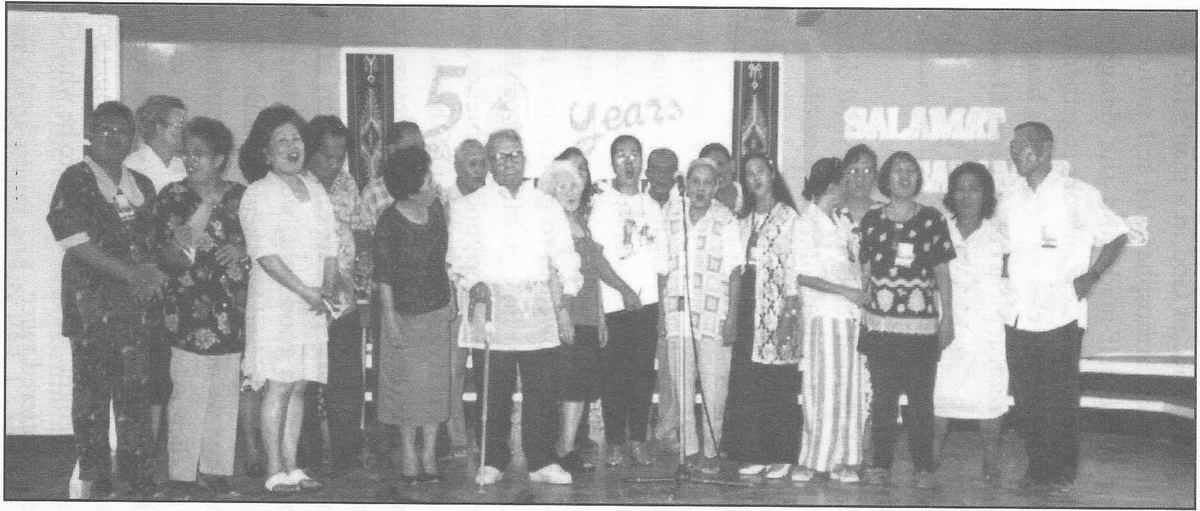
In the meantime, let us fix our eyes on Jesus, the author and finisher of our faith. As the decade of the 90’s slowly pulls down its curtains, we the pioneers can humbly and honestly say, “We have fought a good fight, we have run the race, we have finished the course, and have kept the faith.” (2 Timothy 4:7) Old and tired we may be. But, make no mistake about it; we will still be there when our insights and our gray hairs are needed. Indeed, the potential of greatness is there for Philippine Southern Baptists. Allow us the pioneers to exhort you, “Grab it. And grab it, real tight.” Opportunities to be what God wants us to be are not offered twice.
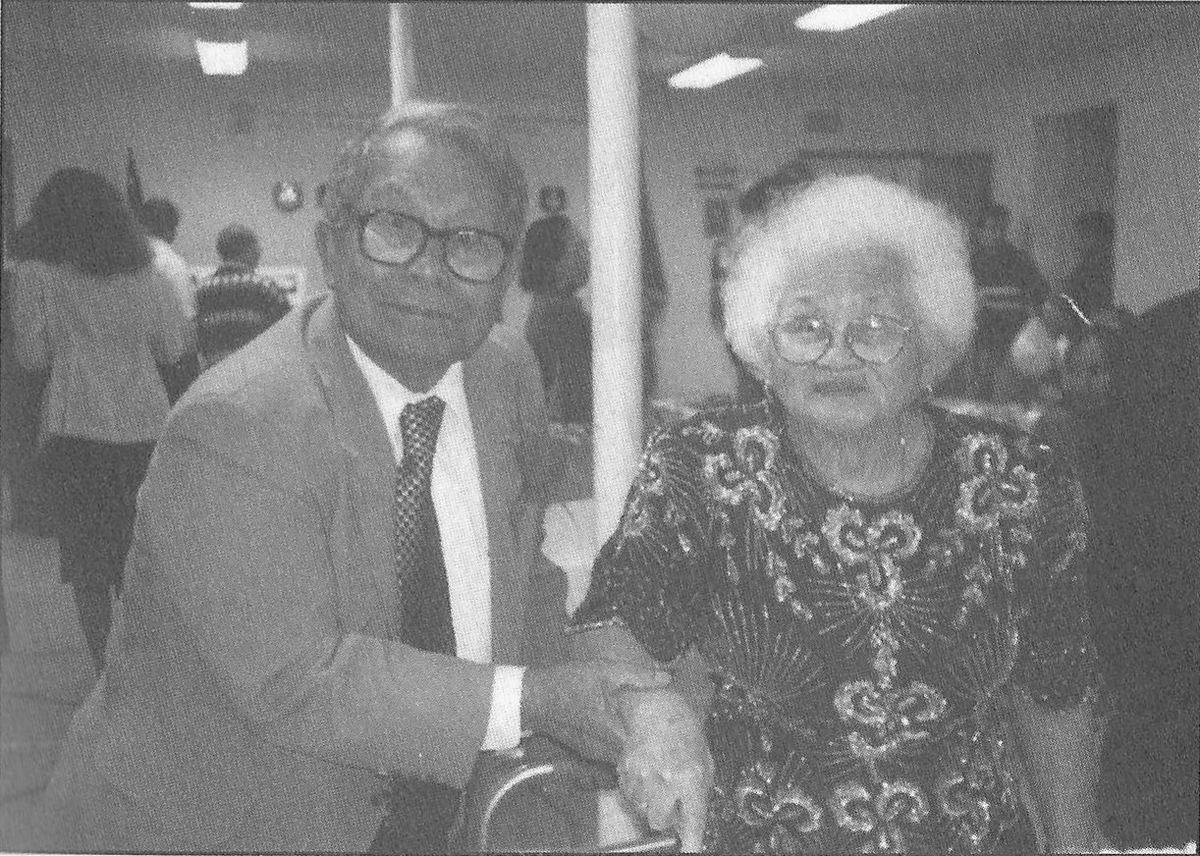
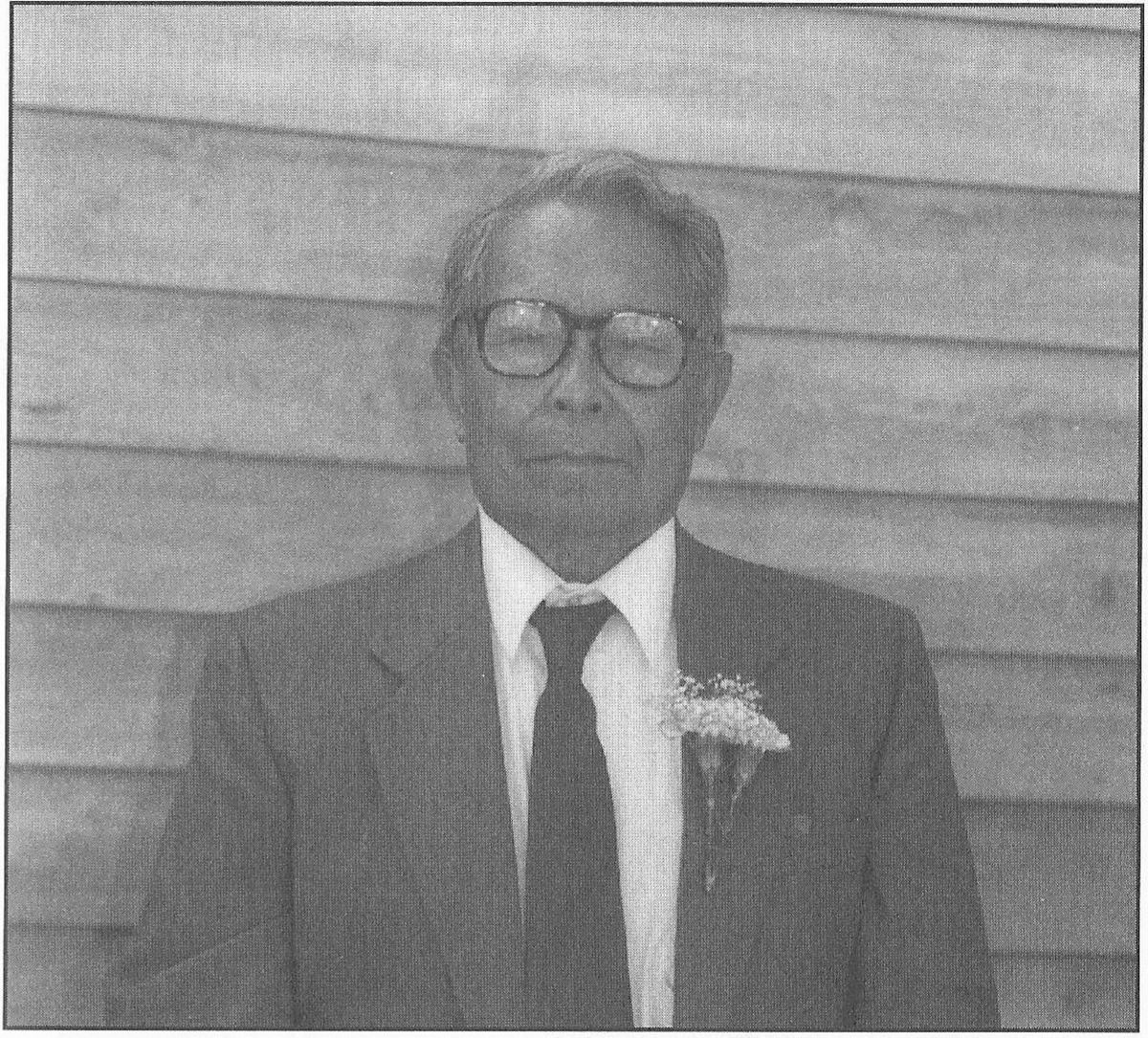
Rev. Vicente T. Onggao
1913–2000
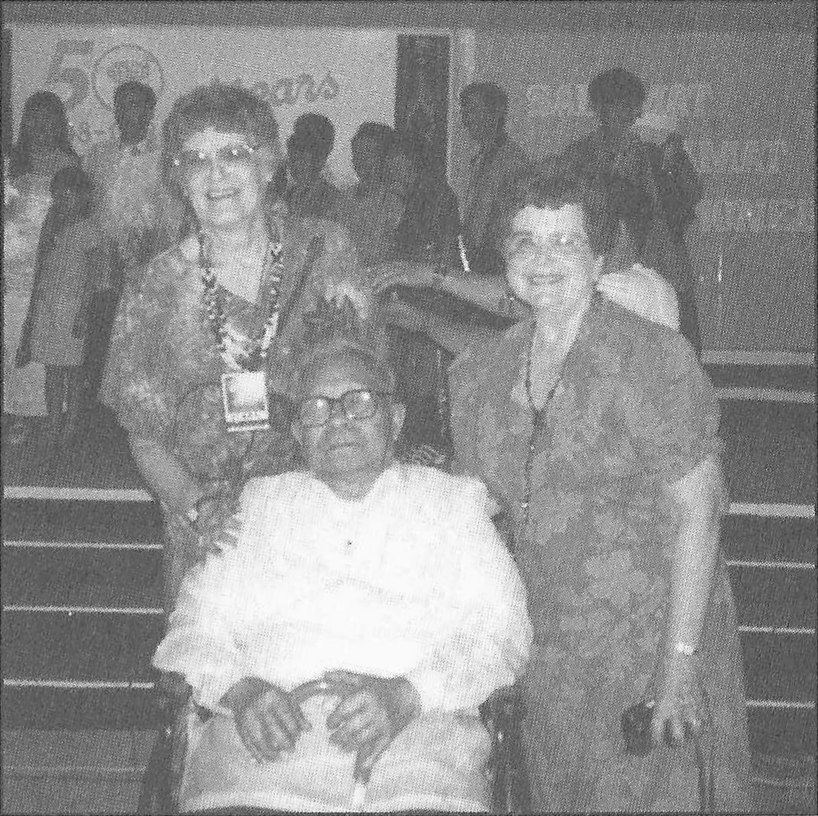
In Special Memory. This little booklet is printed in special memory of Rev. Vicente T. Onggao who loved the Lord and enjoyed serving Him to the end. Also, to all the pioneers of the Southern Baptist work in Mindanao.
“We have heard, with our ears, O God, our fathers have told us, what work thou didst in their days, in the times of old.”
Psalm 44:1
Appendix
Photographs
Every photograph in the book, in the order it appears
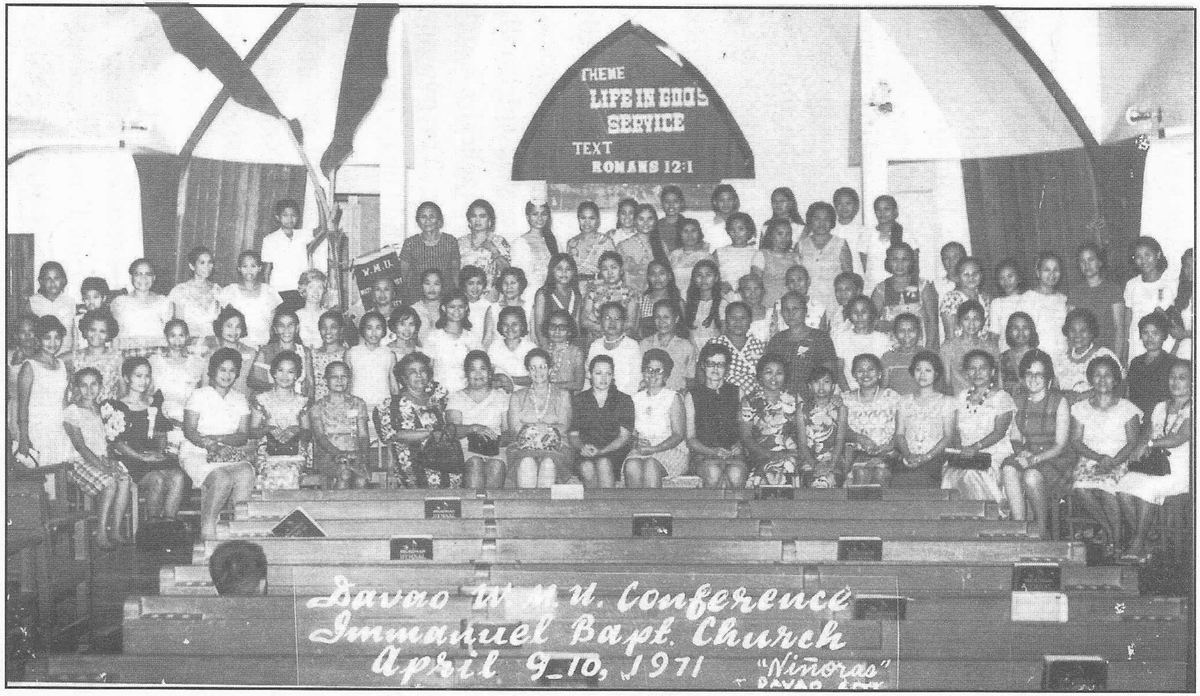
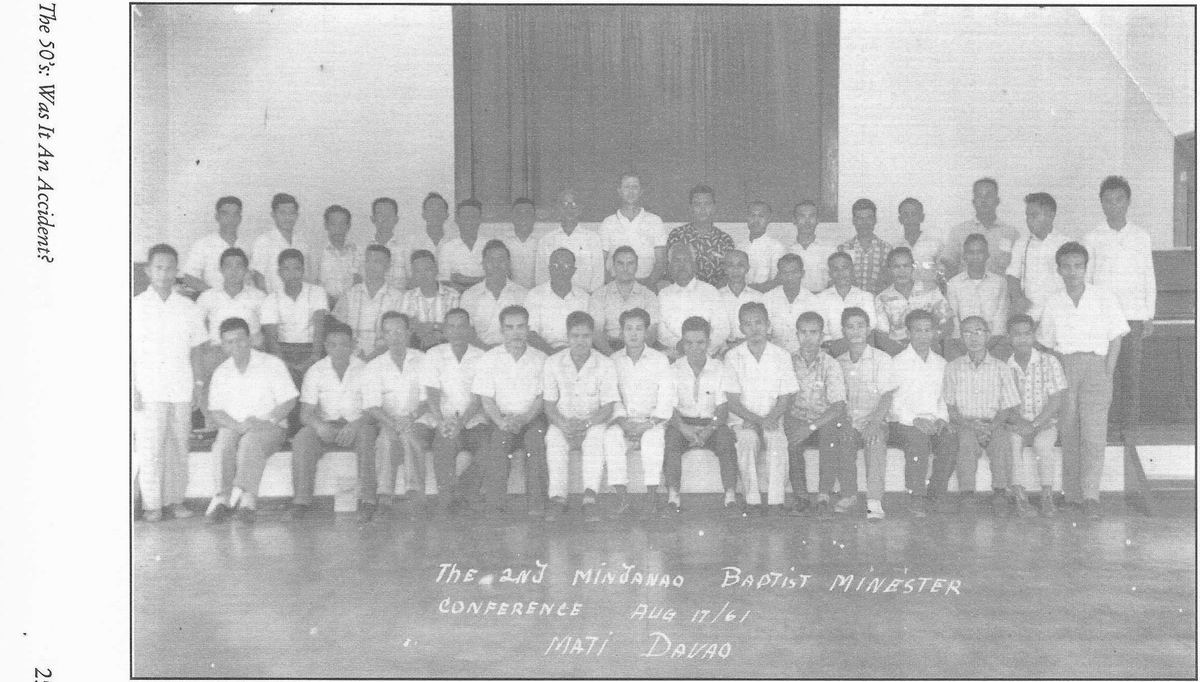
Davao Provincial Jail Force, Davao City — the writer before his calling. p.11 Immanuel Baptist Church, Davao W.M.U. Conference, 1971. p.22 Missionaries and workers of the early ministry. p.24 2nd Mindanao Baptist Minister’s Conference, Mati, 1961. p.25 12th Mindanao Youth Conference, Mati, 1963. p.27 Matina Baptist Church, the first concrete building. p.32 Matina Baptist Church, the new building, 1960. p.34 Palomar–Ocbeña wedding, Davao City, 1960. p.35 Dedication of the Babak Chapel, 1956. p.36 Rev. & Mrs. Onggao with daughter Jemima, Mati Baptist Hospital. p.38 Rev. Onggao with Mr. and Mrs. Loreto Joson, M’lang, 1961. p.41 Jemima Onggao with classmates at SBC. p.41 Students and instructor, Southern Baptist College. p.43 Annual Mindanao Baptist Pastor’s & Worker’s Conference, 1967. p.48 Church Leadership Training Conference, Mt. Carmel, 1968. p.50 Pastor Conference at Mt. Carmel Baptist Assembly, 1969. p.51 Davao W.M.U. Associational Conference, Lupon, 1974. p.52 A missionary family’s Christmas card, Davao City, 1964. p.53 50th year celebration of Southern Baptist work in Mindanao. p.64 The writer with Mrs. Clara Matthews and former Miss Faye Tunmire. p.65 Rev. Vicente Onggao and Mrs. Angeles Onggao. p.65 Rev. Vicente T. Onggao, 1913–2000. p.67 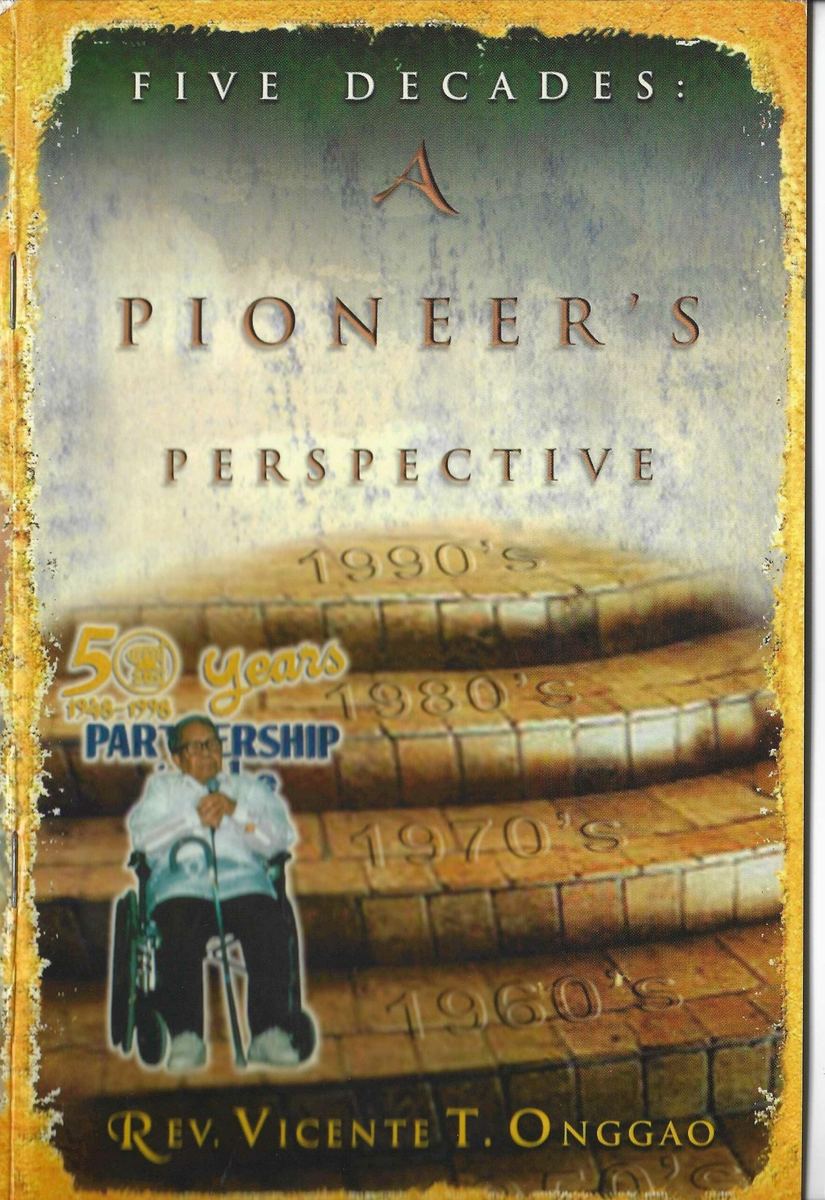
Front cover. 2004 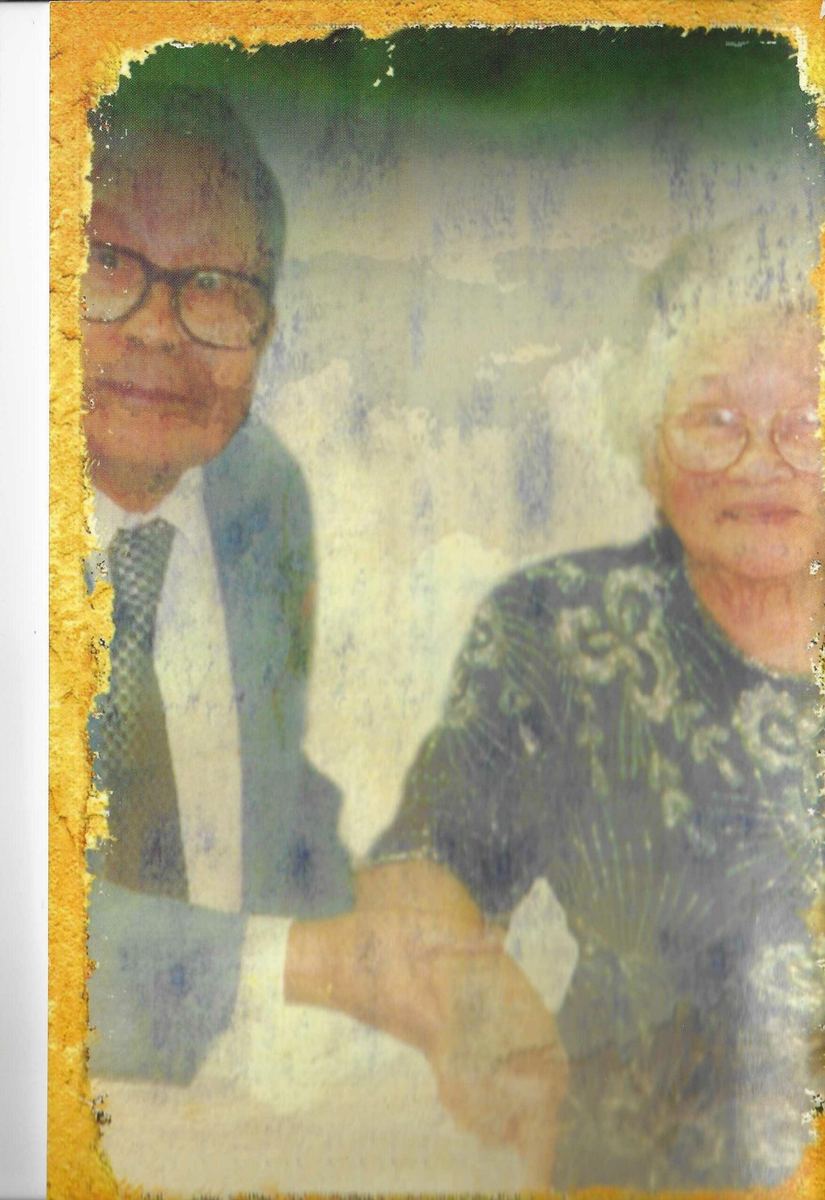
Back cover — Rev. and Mrs. Onggao. 2004